As the Bay Area prepared for the 2025 Folsom Street Fair, I wrote a special newsletter September 25 for the Bay Area Reporter’s readers to help them prepare for the festivities. There is also a version posted to Instagram. Among recent newsletters, it exceeded all but the paper’s breaking news alerts:
Harness the fun of Folsom weekend
You know you’re in San Francisco when Sunday best means leather, latex, and lace.
That’s right – it’s Folsom weekend! ⛓️
The world’s largest celebration of kink, and one of the city’s best-attended annual attractions, began over 40 years ago to preserve a community’s culture during the early days of the AIDS epidemic, and the beginnings of gentrification in the South of Market district.
This year, the Bay Area Reporter decided to provide you an exclusive newsletter edition as your guide to the weekend’s festivities. For our print edition out today, I spoke with Folsom Street’s Executive Director Angel Adeyoha about what to expect at Sunday’s mega event.
Oops, you (probably) missed it!: Among the hottest tickets in town this weekend is for Sneaks, best known as Polyglamorus’ annual Up Your Alley weekend party in late July. After announcing a new Folsom weekend edition, set for September 27, online tickets quickly sold out. There will be a “very small number” of tickets at the door, organizers confirmed. Sneaks Folsom 2025 starts at 10 p.m. at The Mint, 88 Fifth Street.
I also made sure to ask community folks, “What part of Folsom weekend could you not live without?”
🏳️🌈 Robert Goldfarb, the executive director of the Leather & LGBTQ Cultural District: “One of the events I always hit is the Mr. S Leather alley party. They close down the alley next to Mr. S, have a DJ and beverages. That for me is a don’t miss event!”
The Geared Up Alley party at Mr. S., 385 Eighth Street, will be from noon-6 p.m. on September 26 and 27. Admission is free.
🤠 LGBTQ nightlife promoter West Walker: “I absolutely can’t miss the fair, along with the parties Real Bad, Big Muscle, the Mr. S Customer Appreciation beer garden, and the SF Eagle’s patio.”
Big Muscle is at DNA Lounge, 375 11th Street, from 1 to 7 p.m. on September 27. A limited number of tickets are available at the door. The Eagle’s Party on the Patio there, at 398 12th Street, is from 1 to 7 p.m. on September 28. Real Bad is sold out.
✨ SF Office of Transgender Initiatives Executive Director Honey Mahogany: “Folsom Street Fair often has really great live music! Over the years they have had local, national, and even international talent grace their stages. It’s always a treat!”
This year, the fair’s headliner is Kentucky-raised, Colombian American queer artist Cain Culto. The fair, on September 28, has a suggested donation of $10-$20, and runs from 11 a.m. to 6 p.m.
Big Events: As should be clear enough by now, the volume of visitors means tickets to the big events September 27 can be hard to come by. Luckily, if that’s your forte, tickets for Electroluxx Folsom at Public Works, 161 Erie Street, are still for sale and may be your best. Eventbrite tickets are currently $81, plus fees. Electroluxx brings queer culture together from across categories – art as well as performances punctuate dancing through the fog machine on the dance floor and the fog above the street outside. Electroluxx Folsom features four stages, including three indoor dance rooms and an outdoor silent disco, and runs 9:30 p.m. to 4 a.m.
Eventbrite tickets to Folsom Street’s official Saturday party, Magnitude at SVN West, 10 Van Ness Avenue, are still available at $138 plus fees. It runs from 9 p.m. until the morning hours.
Kink ink! But Folsom weekend is about so much more than partying! From horny Bay Area lesbian vampires at sea on a cruise to the Dom/sub, Daddy/boy interpersonal dynamic explored with brio and impeccable detail, our arts writer Jim Piechota takes us on a tour of Kink ink!, the latest in books on kink, leather, BDSM.
Latine leather community events: Powerhouse, Cine+Mas SF Latino Film Festival, and the Queer Latinx Social Club are joining together to present two events for the Latine leather community. On September 26 at 5 p.m., Powerhouse, 1347 Folsom Street, will screen “Encuerados,” a 30-minute documentary about nine Latino men in the leather scene. Admission is free.
On September 27 from 6 to 9 p.m., Powerhouse will host a Queer Latine Leather Happy Hour. Admission is also free.
Event organizer Jimmy Carrillo stated, “Representation matters — not just on screen, but in our community spaces. These events uplift Latine leather legacies and create a safe, celebratory space for queer Latines during one of San Francisco’s most iconic weekends.”
Censorship: From the most-storied historic organizations to the community’s biggest brands, censorship by Instagram has become a threat to the queer community’s freedom of expression, according to five content creators the B.A.R. spoke with in recent weeks who say their accounts have been unfairly policed, or even taken down entirely without clear reasons. Read my thorough report.
Nightlife promoter West Walker, pictured on the ‘Disco Bison,’ is among the queer content creators alleging a double standard by social media giant Meta. Photo courtesy of the Bay Area Reporter.
I wrote this report September 19, 2025, and the B.A.R. editorial board followed up with an editorial based on it October 1, 2025.
Four queer San Francisco content creators and one in New York allege they were treated unfairly by social media giant Instagram. They said their accounts were restricted or even deleted under the auspices of rules around “sexually suggestive” content.
Three of the five told the Bay Area Reporter that Instagram alleged they were selling or buying sex through the platform – charges they say are baseless.
“What I was told flatly, directly, was that because my butt was in the photo, nudity constitutes the solicitation of sex,” said Cameron Cash, a gay man who runs the account @camofthecentury.
As the B.A.R. researched the issue for this article, more queer people and organizations came forward. Most recently, the Exiles, a storied San Francisco woman- and queer-centered educational Leather/BDSM organization, said its account was taken down last month entirely with no specific post cited, just as the city readies for the Folsom Street Fair.
Jesus Gutierrez, a gay man who is the co-founder of Yes Homo, a gay lifestyle brand, said the problem is so pervasive that “everyone who runs a queer business, I feel like, goes through this somehow, someway. It’s like a rite of passage, sadly.”
Another tactic the creators claim Instagram uses is so-called shadow banning, which refers to secretly hiding or downplaying content in user searches and algorithms without notifying the creators.
People carried a sign at the 2024 San Francisco Trans March, for which the Instagram page was deleted the following day, organizers said. Photo courtesy JL Odom
Niko Storment, a queer trans man who is production organizer for the San Francisco Trans March, said that the estimable annual event’s Instagram page was deleted the day after the 2024 iteration. (The Trans March takes place the Friday of Pride weekend.)
Storment runs the Trans March’s Instagram account @transmarch.
“We never engaged – I’ll be very clear – in any kind of sexual whatever,” Storment said. “A lot of my business dealings would happen through Instagram because I’d be hiring people based on their profiles.”
When Storment was using Instagram in helping organize a party at Public Works during Pride weekend 2024, Meta flagged a conversation with a queer creator, who wishes to remain anonymous, being hired for the party as Storment “hiring someone to do sex work” and shut down all his accounts, Storment said.
“Queer culture is often labeled as inherently sexual,” Storment said, adding that the shutdown on the Saturday of Pride weekend in 2024 hurt business – but also queer visibility and community building.
“Luckily, through our network, we had someone who worked at Meta who was able to send in a ticket item,” Storment said, adding it was “reversed by a real human.”
Storment stated there was no issue with the Trans March’s Instagram account this year.
Kara Plaxa, left, and Tammy Wright are the co-coordinators of the Exiles, which had its Instagram taken down without a specific post cited. Photo courtesy Kara Plaxa
SF queer nonprofit deplatformed Kara Plaxa, a queer femme leather activist who is co-coordinator of the Exiles, told the B.A.R. that she was notified the group’s Instagram account was suspended on August 12.
“The only explanation provided was, ‘Too much activity on your account that doesn’t follow our Community Standards,’” Plaxa stated, quoting the Meta message, which the B.A.R. viewed. “No specific content or posts were flagged, and importantly, all but one of the same posts remain available and compliant on Facebook.”
Plaxa stated the Exiles filed an appeal. But two days later, Meta decided to permanently disable the account.
“No one from Meta reached out directly,” Plaxa stated. “The only communication we received were automated notices inside the app. The first said our account had ‘too much activity’ and didn’t follow community standards. After appealing, we got a final message that Meta ‘reviewed the content and still found it to be in violation.’ At no point were we told what specific post or content was the issue.”
Plaxa continued, “Our community lost 80% of our media reach in a single month.”
“That’s not an accident,” Plaxa stated. “That’s erasure. Instagram was how we reached about 77,000 people with education on consent, queer history, and BDSM skills around power dynamics. … We’re not just teaching BDSM skills. You’ll find us at protests and inside San Francisco City Hall, standing shoulder-to-shoulder with our fellow community members, fighting together.”
Plaxa gave as an example the recent protest activity over the former Compton’s Cafeteria site in the Tenderloin. Plaxa claims Meta-owned Facebook has shadow banned The Exiles’ account.
Nightlife promoter affected West Walker is a gay nightlife promoter who readers may remember won the Sisters of Perpetual Indulgence’s Hunky Jesus contest at Mission Dolores Park during the drag philanthropic group’s Easter party earlier this year. He runs the Instagram account @truckdoesdisco for the eponymously named night at The Stud, an LGBTQ bar in San Francisco’s South of Market neighborhood. Walker said that Truck’s Instagram was deleted for a time last November for a picture that featured four men in Speedos, one in a jock strap, and one of the men’s hands on another’s back.
“It wasn’t sexual,” Walker said. “We’d definitely posted more scandalous things than that, but that is what we got pulled for and flagged.”
Walker said he “had to create a brand new account, and we’ve been following the guidelines and haven’t posted anything anywhere near as scandalous.”
But then, in the spring, his connected personal account was disabled because his personal account shared a post months earlier from the initial Truck account that he’d been tagged in but that had later been “flagged as inappropriate.” Asked what the post was of, Walker said it “showed half a butt cheek.”
Walker decided to try to get in touch with Meta Support. When he did, he was told that “even just sharing something I had been tagged in was violating community guidelines,” he said. (He said he no longer has the emails.)
“That just did not make sense,” he continued. “I started keeping a file every time I see content I think violates community guidelines. I started taking screenshots of those and I’ve got 10, at least, of female content creators showing full areolas, in some cases full vaginas.”
Walker still operates with limits on his accounts. He can’t monetize his accounts or use the live feature that allows a webcast. He said that on average, there’s been a 75% drop in viewers on Truck’s posts, which he attributes to shadow banning.
“My mom is a Southern Baptist minister’s wife, and I wouldn’t put anything I wouldn’t want her to see,” he said.
Instagram, owned by Menlo Park-based Meta, which also owns Facebook, Threads, and Whats App, didn’t return a request for comment for this report.
Meta also didn’t return a request to comment on the particular cases.
Paige Collings, a queer person who’s a senior speech and privacy activist at San Francisco-based Electronic Frontier Foundation, told the B.A.R. that these tactics are all too common.
“When we’re talking about LGBTQ content creators and queer content online, what we’re talking about is an algorithmic silencing of this content,” Collings said. “We know – particularly over the past two years, and especially since November of last year – that we’ve seen a proliferation of censorship of LGBTQ content. The first way is an intentional censoring of content: algorithms say it’s harmful for children, or depicts nudity. The other part is shadow banning, which is difficult to track and less predictable.”
Collings said that when someone is shadow banned, “the algorithm is tracking [the account] for a specific reason, so that the account is not promoted in the same way other content would be if it were about, say, erectile dysfunction instead of queer rights.”
Either way, “there is censorship of this content, regardless of the mechanism,” Collings said.
Instagram’s policies Cash said that “Instagram does not claim shadow banning is real.”
“However, they do limit the reach of certain posts algorithmically via hashtags and AI,” he said, referring to artificial intelligence.
Instagram’s posted policy on its website is that it has “Community Standards that define what’s allowed in order to keep Instagram an authentic and safe place for inspiration and expression. If we’re made aware of a post that goes against our Community Standards, we’ll remove it from Instagram. While some posts on Instagram may not go against our Community Standards, they might not be appropriate for our global community, and we’ll limit those types of posts from being recommended in places like Explore and search results.”
The policy continued that, “For example, a sexually suggestive post will still appear in Feed if you follow the account that posts it, but this type of content may not appear for the broader community in Explore and search results.”
The Community Standards proscribe adult sexual exploitation; child sexual exploitation, abuse and nudity; and adult sexual solicitation and sexually-explicit language.
Multiple mediaoutlets have reported in the past that Instagram has unfairly targeted LGBTQ content for removal and shadow banning.
Last year, LGBTQ media advocacy organization GLAAD reported in its Social Media Safety Index (SMSI) that, “LGBTQ content is disproportionately censored via removal, shadow banning, demonetization, or ‘graphic content’ overlays” on Instagram, which it called “part of a larger, troubling trend” that is “is particularly upsetting in light of Meta’s failures to mitigate the vast amount of hate-fueled and violent content that researchers say Meta has allowed to proliferate across its platforms.”
This year’s social media report, which GLAAD released in May, blasted Meta for changes in its “Hateful Conduct” policy.
Meta CEO Mark Zuckerberg announced earlier this year a loosening of the rules over hate speech and abuse on the platforms – which include Facebook and Instagram – citing “recent elections,” the Associated Press reported. Zuckerberg also dropped fact-checking in favor of a “Community Notes” system similar to what X installed after Elon Musk purchased the company formerly known as Twitter in 2022.
As part of the policy changes at Meta, it clarified in its community standards that “we do allow allegations of mental illness or abnormality when based on gender or sexual orientation, given political and religious discourse about transgenderism and homosexuality and common non-serious usage of words like ‘weird.'”
The 2025 GLAAD report stated, “Meta should remove these harmful exceptions from its ‘Hateful Conduct’ policy and provide LGBTQ people with strong protections against hate, harassment, and violence on its platforms.”
EFF’s Collings said it’s ironic that Meta is uplifting homophobic and transphobic content while silencing LGBTQ accounts.
“There’s a proliferation of hateful content being shared on these platforms,” Collings said. “If we look at Meta’s revision of community standards, it’s permitted content that would’ve previously been swept up as transphobic and homophobic, and this was done with the intent of increasing freedom of speech, that the conversation offline should be able to happen online. Unfortunately for queer people, for trans people, a lot of content that is discriminatory and offensive is now being promoted on these platforms. That change really did underlie an evisceration we’ve been seeing for a long time of protections for queer content creators.”
Asked about the matter, a GLAAD spokesperson stated to the B.A.R., “The LGBTQ community not only faces outsized levels of online hate and harassment, we also experience disproportionate content removals and censorship.”
“Platforms disproportionately suppress LGBTQ content, via removal, demonetization, and shadow banning,” the spokesperson continued. “As noted in the SMSI, Meta and other platforms must strengthen and enforce (or restore) policies that protect LGBTQ people and others from hate, harassment, and misinformation, and also from suppression of legitimate LGBTQ expression.”
The spokesperson also stated that Meta isn’t following best practices around transparency for content creators, that users sometimes feel a sense of total helplessness when promulgated rules about how to appeal aren’t followed, and that often people at the company can’t be reached.
A 2021 University of Michigan study found that, “moderation algorithms appear to flag queer content more than non-queer content” on the platform.
This Yes Homo T-shirt featuring New York City LGBTQ bars was taken down from Instagram for alleged support of “dangerous organizations.” Photo courtesy Jesus Gutierrez
Shadow banned Cash said he noticed he was shadow banned a month ago when his user name became harder to find in the search function.
“When you put in my username, ‘camofthecentury,’ usually you put ‘camofthe’ and mine would come up. There’s not many user names that start that way. A month ago, I noticed I had to put in the entire username,” he said.
Instagram claimed he was soliciting sex after it took down a photo of Cash tied from behind in multi-colored ropes. Some of his buttocks are visible on the right side of the photo.
“What I was told flatly, directly, was that because my butt was in the photo, nudity constitutes the solicitation of sex,” Cash said. “That was a shock. It made me take a huge step back.”
In a text discussion between Cash and Meta Support viewed by the B.A.R., Cash stated, “There is no seeking or offering of sexual favors,” and in response Meta Support stated, “Actually, as per system, nudity falls under sexual solicitation. But I do understand what you are trying to say.”
Despite the acknowledgement, Cash is still shadow banned.
He told the B.A.R. that Meta “can just say whatever they want,” adding the matter is “incredibly discouraging because I invest so much time and effort into that account – not to make money, but to create content I feel uplifts the community,” such as about self-love and spirituality.
“I just don’t understand,” he lamented. “Knots on the back and Instagram took it down with the claim the photo depicted a sex act.”
Gutierrez runs one of Instagram’s hottest LGBTQ brands, with over 36,000 followers, selling “chaotic. Fun. s*xy. apparel” and posting thoughts on gay and queer identity interspersed with beefcake pictures featuring the brand’s clothes. He said Yes Homo was suspended February 1. (The B.A.R. viewed a screenshot of the suspension and an alleged violation for “encouraging sexual activities.”)
“We share content that’s very sex-positive and sexually free, and Instagram, for some reason, it’s mostly AI moderation tools, decided to take down a lot of our content,” Gutierrez said, referring to artificial intelligence. “In February, they suspended our full account. We are trying to build community above all, and it’s the backbone of our business, so it’s a bad position to be in.”
Luckily for Gutierrez, he was “able to be in touch with someone at Meta – I know that’s a real privilege – and once they manually reversed, they reinstated” his account in three days.
When his account was reinstated after the internal ticket review, all the records of previous violations were also cleared, giving the account a clean slate.
Asked what reason Meta had given, Gutierrez told the B.A.R. that Meta stated he was violating rules around sexual solicitation, citing a post about how the company was “for homos, by homos.”
“Like our community,” Gutierrez explained, “which is obviously not sexual solicitation.”
One T-shirt of New York City LGBTQ venues was flagged as “promoting dangerous organizations.” The B.A.R. viewed a screenshot of the allegation.
“It just says ‘NYC Gay’ and on the back has a list of the queer bars in New York City,” he said. “It was really tame. It was someone wearing the shirt with a jock strap on. It’s inconsistent because I’ve seen bare butts before” on Instagram.
Asked how it has impacted his business, Gutierrez stated that while he doesn’t have hard data, “It’s been a toll on our mental health.”
“I know that sounds silly,” he added, “but the first thing I do when I wake up is make sure our account wasn’t taken down overnight. When things are taken down it just prohibits our growth, because a lot of the content we post is shareable.”
Meta paid money to Trump after election win Walker, the nightlife promoter, connects the more challenging environment for queer content creators to the resurgence in right-wing politics in recent years, saying Meta had not been as stringent in the past.
Shortly before the interview with Walker, Zuckerberg was caught on a hot mic – after saying Meta would be investing $600 billion into the U.S. – saying to President Donald Trump that he wasn’t “sure what number [announced dollar figure] you wanted to go with.”
Zuckerberg was a guest of honor at Trump’s inauguration January 20, and Meta gave $1 million to help fund the event, shortly before the company loosened the rules around “hateful conduct.”
Then-President Joe Biden had called out Meta’s changes during his January 15 farewell address to the nation, in the section in which he warned about an “oligarchy taking shape in America of extreme wealth, power, and influence that really threatens our entire democracy, our basic rights and freedom,” and a “tech-industrial complex.”
Zuckerberg had claimed on Joe Rogan’s podcast that Biden White House officials would “call up the guys on our team and yell at them … cursing and threatening repercussions if we [didn’t] take down things that [were] true.”
Meta agreed to pay $25 million to Trump personally as part of a legal settlement over his suspensions on Instagram and Facebook in the aftermath of the January 6, 2021 insurrection at the U.S. Capitol. Of the settlement, $22 million will go toward Trump’s presidential library.
Supervisor Joel Engardio, pictured, was recalled by Outer Sunset voters in September 2025.
After his support of a successful ballot proposition that nonetheless tanked in his own district, which turned the Great Highway on San Francisco’s westside into a public park, Outer Sunset Supervisor Joel Engardio was recalled by District 4 voters September 16, 2025. I covered the recall for the Bay Area Reporter and the Richmond Review/Sunset Beacon. I have included links to these reports, as well as the text of my final report.
On Sept. 16, District 4 voters in the Sunset District decided they wanted to change who represents them at City Hall. With about a year left in his term, Supervisor Joel Engardio was recalled in a citizens’ revolt primarily over his support of the closure of the Upper Great Highway to vehicle traffic and the creation of the new Sunset Dunes park on the site.
The recall was decisive. According to the San Francisco Department of Elections, 62.72% voted in favor of the recall and 37.28% were opposed. Nearly 43% of the 50,273 registered District 4 voters turned out to vote in the special election.
“The residents of District 4 sent a message to Joel Engardio that they’re a lot smarter than he thought they were,” said Richard Corriea, a former San Francisco Police Department commander who helped lead the recall, at an election night party at Celia’s by the Beach restaurant.
Engardio rode the wave of westside voters feeling ignored by City Hall into office back in 2022, becoming the first person to unseat a sitting, elected supervisor (Gordon Mar) since the return of district elections a generation ago.
In a statement the night of the recall vote, Engardio was defiant. He argued his fateful decision to embrace 2024’s Proposition K – which replaced a compromise keeping the Upper Great Highway open to vehicle traffic on weekdays while it was used for outdoor recreation on the weekends – would one day be judged as having been on the right side of history.
“The Golden Gate Bridge faced a lot of resistance when it was proposed. Detractors called it an ‘upside down rat trap,’” Engardio said. “Thankfully, forward-looking people had the courage to build it anyway and create the icon of our City. This is the story of Sunset Dunes, and I invite you to visit. Find new ways to connect with nature. Discover the food, art and culture of the Sunset neighborhoods. Be inspired by your coast and your park.”
Engardio said that having the whole City vote on Prop. K, “allowed for more public debate in the most open, democratic and transparent process possible.”
Although the measure won citywide, it failed in every precinct of District 4. Sixty-four percent of District 4 voters rejected Prop. K.
It was also overwhelmingly rejected by Richmond District voters. Their representative, Supervisor Connie Chan, said she will “explore a ballot measure” to reopen the Upper Great Highway to vehicle traffic on weekdays.
In a statement, San Francisco Mayor Daniel Lurie – who will choose a successor to Engardio after Engardio vacates his seat on Oct. 10 – acknowledged voters’ concerns.
“As I campaigned for mayor last year, I heard countless westside families say what San Franciscans have been feeling for years – that their government is doing things to them, not with them, and that government is not working to make their lives better,” Lurie stated. “We will continue to be in constant communication with our partners in government and across communities as we work to make San Franciscans’ lives better. That means delivering a city that is safe and clean, where small businesses can thrive and the next generation of San Franciscans can afford to raise their children.”
At the election night party, Quentin Kopp, a former San Francisco supervisor, also spoke, rallying the crowd to oppose Lurie’s upzoning proposal, which he called the “next fight.” So too did recall organizer Otto Pippenger, who also used his Celia’s victory speech to deride Lurie’s proposal to increase property taxes to close the San Francisco Municipal Transportation Agency’s $322 million deficit.
Former supervisor Quentin Kopp (left) announces that San Francisco District 4 Supervisor Joel Engardio is likely recalled after election returns were first announced at the recallers’ victory party September 16 at Celia’s by the Beach in the Outer Sunset, while recall organizer Otto Pippenger (center) and proponent Richard Corriea (right) applaud.
The upzoning plan was approved by the SF Planning Commission on a 4-3 vote just days before the recall. It expanded the earlier Western Neighborhoods Plan to increase height limits on corridors such as Judah and Taraval streets.
State Sen. Scott Wiener lamented Engardio’s fate, stating that “various leaders of the recall movement … will deeply harm San Francisco and San Franciscans” if their plans are successful by “freezing the City in amber, destroying a popular park and stopping new housing (including in the Sunset, where home prices are explosively expensive),” if their plans are successful.
“Those of us who believe that for San Francisco to thrive it must be willing to build housing, create public spaces, and have a sustainable transportation system, will continue to fight for a strong future for the greatest city on the planet,” Wiener stated.
Wiener’s former political director, Todd David, now at Abundant SF, had a meeting with Engardio and current president of the Friends of Sunset Dunes Lucas Lux that was not disclosed on a copy of Engardio’s calendar provided to Corriea earlier this year. A previously released version of the calendar entry had disclosed the meeting, which is how the discrepancy was discovered.
Recall proponents revealed the matter in July and said Engardio should resign over it. For his part, Engardio attributed the mistake to “human error” in an interview.
The San Francisco Sunshine Ordinance Task Force voted 8-0 on Sept. 3 concluding Engardio was not in compliance with local ethics rules about his calendar. The task force forwarded the matter to the City’s ethics commission, which can decide to investigate.
According to Bill Barnickel, president of the Outer Sunset Merchants and Professional Association, Lurie told merchants at Andytown Coffee Roasters on Taraval Street he will appoint someone who wants to run for the next term, Mission Local (missionlocal.org) reported on Sept. 26.
Barnickel said the mayor made it clear.
“If we pick someone, we have to make sure they go into the next four years as the supervisor and do a good job,” he said.
Interviewing then-mayoral candidate Daniel Lurie, right, at the Beaux nightclub in San Francisco’s Castro neighborhood in 2024, as Adam Sandel looks on. Photo courtesy of Adam Sandel.
During the 2024 general election campaign, I spoke with each of the main candidates in San Francisco’s Castro neighborhood, for which I got a first place award in election coverage from the California Newspaper Publisher’s Association. I also spoke with Gov. Gavin Newsom as he campaigned for the marriage equality proposition, with Speaker Emerita Nancy Pelosi as she visited a center for LGBTQ youth, and twice with Libertarian Party presidential nominee Chase Oliver.
These were those reports, underneath which I have included the whole text of my coverage of a meet-and-greet with the eventual winner, Daniel Lurie.
San Francisco mayoral candidate Daniel Lurie sounded off about the long-shuttered Castro Pottery Barn and the eponymous theater and the recent fire next door to it as he made his pitch to voters at an LGBTQ nightclub August 12.
Lurie also answered the Bay Area Reporter’s questions about how he’d make appointments, his thoughts on ongoing homeless encampment sweeps, and his path to victory.
Lurie appeared for an LGBTQ meet-and-greet at the newly-renovated Beaux on Market Street, attended by about 60 people. Among the five major candidates, Lurie is currently running third in the race, according to a San Francisco Chronicle poll, at 17% in the first round of ranked-choice voting. An heir to the Levi’s fortune who later became founder and CEO of the nonprofit Tipping Point Community, Lurie was running behind incumbent Mayor London Breed (28%) and former mayor Mark Farrell (20%) in the poll, conducted between July 31 and August 5, but ahead of Board of Supervisors President Aaron Peskin (12%) and District 11 Supervisor Ahsha Safaí (5%). Eighteen percent of voters were undecided.
Lurie told the B.A.R. after the event that he’s very much in the mix, saying “our favorable ratings are higher than everybody else’s. We do well on ranked-choice voting in every poll, and people like our message all across the city. I’m running against people that have picked very narrow lanes. We can hit people in every lane.”
Darrin Martin, a Castro resident, asked Lurie during the event “what can you do about the Pottery Barn?” in a question about empty storefronts. The old Pottery Barn, shuttered since 2017 at Castro and Market streets, has become emblematic of the neighborhood’s commercial vacancy crisis despite recent openings and reopenings elsewhere in the LGBTQ neighborhood. The space has been considered for a welcome center, an LGBTQ history museum – and Lurie’s campaign headquarters, he revealed.
“I tried to rent that as our headquarters. … We’ve tried to tax empty storefronts. That doesn’t seem to be doing the trick,” he said, referring to city tax policies. “I’ll go back to a vibrant economy and tourism. We need the Castro to be thriving. I’m happy the fire was limited; that could have been a catastrophe.” (Lurie said the Pottery Barn landlord wanted too much money.)
He was referring to the August 10 fire next door to the theater. The B.A.R. reported that the blaze occurred at the US Bank branch next door at 443 Castro Street; initial rumors in the neighborhood were that the Castro Theatre – in the midst of a renovation and restoration project by Another Planet Entertainment – was the site of the blaze. The theater was not damaged and there were no injuries.
“The Castro Theatre is going to be a huge help for this corridor,” Lurie added, referring to the site’s reopening tentatively scheduled for next year.
Lurie added that “going back to making sure streets are clean and safe” will help with the vacancy problem.
“Making sure we have a safe nightlife, a safe culture,” he added. “People go home early because of safety reasons. The more corridors are safe and clean, these landlords will want to get in on the action and want to be a part of it.”
Martin blamed landlords for the problem, saying “they’re greedy and want more money.”
Responded Lurie, “We need to call them out for that but there’s not a lot we can do as a mayor.”
Added Martin, “I know what has been done and it’s not working.”
Responded Lurie, “If I don’t have the answer, I’m going to phone a lot of friends and see what’s worked in other cities. We could get to the bottom of it. … Let’s find the reach of our power.”
Lurie, gay supporters tout outsider status
Lurie’s pitch is that he’d be effective as mayor because he’s not what his campaign has phrased a “City Hall insider.” He has never held elective office. All of his major opponents have been city supervisors, and two have served as mayor.
Lurie said that gave him the private sector’s eye for efficiency – referencing a time he said he built 143 units of affordable housing at 833 Bryant Street in three years at a cost of $377,000 per unit, instead of a citywide average of seven years at $1.2 million per unit.
Despite skepticism from some unions, the project lease and sublease agreement passed the Board of Supervisors 11-0 in 2020.
“They [his opponents] say he [Lurie] doesn’t have City Hall experience?” Lurie asked. “Thank goodness.”
Lurie added his opponents have a combined 70 years of elected experience.
It was this clarion call for a change that led Adam H. Sandel, a gay San Francisco resident, to invite Lurie to Beaux for the meet-and-greet in the first place. Sandel, a freelance contributor to the B.A.R.’s arts section, said he’s lived here for 23 years and was proud of the city under the mayoralty of Gavin Newsom, now California’s governor.
“This is a beacon of equality and freedom,” he said of San Francisco. “Since [Newsom] moved on, the leadership has not been so good in this city.”
Sandel mentioned crime, homelessness, addiction, and vacant storefronts as evidence of that.
“Now, when I tell people I’m from San Francisco, they say, ‘Are you OK? Are you guys OK?'” Sandel said. “I started saying, ‘we just had some really bad leadership but we’re going to change that.’ Then I heard Daniel Lurie speak, and when he was done speaking, I have not felt that much hope for the future of San Francisco since Newsom was in there.”
After the event, another gay Lurie supporter, Jason Minix, told the B.A.R. that he trusts the former nonprofit CEO because he was trying to help the city already as a private citizen.
“Daniel has been working for San Francisco by choice,” Minix said, referring to Lurie’s time at Tipping Point. “He’s so engaged with the city – something I haven’t seen in other candidates.”
But the outsider language only went so far; when the B.A.R. asked Lurie – who blamed what he feels is an overbearing bureaucracy on his opponents and electeds – how he’d appoint the right people to the right positions and avoid being taken advantage of as mayor, he said he’s done plenty of work with city leaders and has more than apt advisers.
“I have 30-year commanders in the police department,” Lurie began. “I have John Rahaim, [former] planning [director] endorsing me. I’ve had [former] mayor Frank Jordan endorse me. I know who works inside City Hall now; I’ve worked with a lot of them. I have a lot of experience with a lot of people in that building. I won’t be taken advantage of. I’ve worked with them on Super Bowl [50], I’ve worked with them to get housing built, I’ve worked with this mayor and I know there’s a lot of good people in there and a lot of people we need to change out.”
(Rahaim, a gay man, oversaw the planning department from 2008 to 2019. In a July email sent out by Lurie’s campaign about his housing plan, Rahaim wrote, “It’s clear to me that Daniel’s strategy presents the best opportunity to address our affordability crisis in San Francisco.”)
Lurie said current officeholders don’t take accountability.
“We’ve got a lot to be proud of but our elected leaders have led us down a road where everything is a blood sport,” he said, adding later that “the buck stops with me” if something goes wrong in the city.
“You’re not going to hear me blame the Board of Supervisors or the police chief,” he said. “It’s going to be on me right away.”
City not doing enough on homelessness, Lurie says
Lurie is running on a platform of expanded treatment, recovery, and shelter for the homeless; a crackdown on fentanyl dealing; addressing public safety and the decline of downtown; reforming permitting; building housing; and tackling corruption.
He characterized the Breed administration launching sweeps of homeless encampments after the U.S. Supreme Court’s decision in City of Grants Pass v. Johnson – which held in June that it is not illegal for cities to enforce bans against public camping targeted at the homeless – as a politicized decision meant to give her an edge in a difficult election year.
“You’re going to get clean streets every four years under this mayor. The other three and a half, nothing gets done,” Lurie said. “This mayor used the injunction [against enforcing public camping laws] as an excuse for inaction, and every day there’s tents and an encampment is another sign of failure and we’ve seen that for two years and this is what we got? Ripping people’s tents away? We need more shelter beds, we need to give people bus tickets home.
“This mayor is saying a lot of those things but they haven’t added enough shelter beds, they weren’t doing bus tickets home in the way that they should have; now she’s ramping that up, and we need to have the mental health and drug treatment beds, like you heard me say in there,” he added. “And then we have the tool of citing and removing people’s things, which is absolutely a tool we’ll have to use. But, this is a city that has failed to deliver on the promise of treatment on demand.”
Lurie said he supports mandated treatment but only after alternatives have been tried.
“You can mandate treatment now, and we should, we should use CARE courts to get into treatment,” he said. “But we’re not doing it. [The Department of Public Health] is not doing it.”
Community Assistance, Recovery and Empowerment, or CARE, courts were established by Newsom last year. The goal of the program is to get people in crisis off the streets. According to a fact sheet from Newsom’s office, CARE court connects a person struggling with untreated mental illness – and often also substance use challenges – with a court-ordered Care Plan for up to 24 months. The first CARE Court in San Francisco County was launched last October 1.
Lurie invited people interested in volunteering with his campaign to table at the Castro Farmers Market held on Wednesdays.
“We’re going to outwork, outhustle every other campaign,” he said. “Nobody’s going to outwork me. I’m going to be like [late mayor] Dianne Feinstein – I’ll walk the street every day.”
Boston Blake, who when asked by the B.A.R. identified as “gay as a tree full of fairies on nitrous oxide,” said he likes what he heard but wants to hear more.
“His heart is in the right place. He has the confidence, competence and know-how to navigate our weird San Francisco political system,” Blake said. “I still want more details.”
Rivals respond
The B.A.R. – which has conducted interviews at Castro campaign stops with the Breed, Peskin, and Farrell campaigns – reached out to all four of Lurie’s major opponents to request their response.
Breed campaign spokesperson Joe Arellano replied that “Daniel Lurie has zero credibility on homelessness. His nonprofit pledged $100 million to cut homelessness in half in five years, and instead it went up 25% over that time frame.
“His nonprofit also funded the Coalition on Homelessness so they could hand out more tents to people on the streets,” Arellano continued. “On the issue of homelessness, Daniel Lurie has lied about his resume more than George Santos.”
Santos is the gay Republican former congressman from New York, expelled from the House of Representatives after being exposed as a fabulist.
Arellano continued the Breed campaign’s critique, turning his attention to law and order.
“Daniel Lurie thinks binge watching ‘Law and Order’ from his $16 million Malibu vacation home qualifies him to make public safety decisions,” he stated. “The reality is that crime in San Francisco has dropped to historic lows. Out of desperation, Lurie is peddling the same anti-San Francisco narrative as Trump and Fox News, to convince voters that things are bad in our city.”
Reported crime – both property crime and violent crime – is down to pre-COVID levels according to police statistics, but critics charge it’s possible more crime has gone unreported as San Franciscans have lost faith.
“In contrast, Mayor Breed continues to serve as San Francisco’s biggest champion, promoting her vision for the next four years: more housing, lower crime, fewer tents, more parks and open space, and a city that is affordable for residents, families, and the people working hard to make our city great,” Arellano concluded.
Peskin agreed with Lurie about the current sweeps but questioned his experience.
“Sweeps are both cruel and ineffective. They are a sign of the mayor’s failure to seriously address homelessness in her six years of office,” Peskin stated. “Many of the homeless youth on our streets are LGBTQ kids fleeing terrible situations, and they deserve better. On day one, I will convene the heads of the nine departments and 248 service providers addressing homelessness, force departments to improve their coordination, untangle the web of overlapping bureaucracies and nonprofit service departments, and bring order out of chaos. That’s not a job for an outsider with no management experience.”
Lurie served as CEO of Tipping Point from 2005 to 2019.
Safaí campaign adviser Derek Jansen had a similar statement to Peskin’s. “Anyone with a sense of right and wrong can tell you that encampment sweeps without solutions are inhumane and just a political gimmick,” he stated. “The only reason to say ‘no experience needed’ is if you don’t have any real experience bringing people together to solve real problems.”
The Farrell campaign didn’t return a request for comment for this report.
A photo of Shani Nicole Louk, 22, was still up in June at the Nova festival site that was attacked by Hamas last October 7. She was a German-Israeli whose body was paraded through Gaza City in a viral video.
In May 2024, my employer the Bay Area Reporter was approached by the American Middle East Press Association with the offer to send a reporter to Israel to cover the Israel-Hamas War in Gaza. I decided to go, and went to Tel Aviv, both East and West Jerusalem, the border of Lebanon, and the sites of Hamas massacres on Oct. 7, 2023, among other sites, in June, followed by a series of stories on the war and related issues in the broader Israeli-Palestinian conflict. I made sure to speak to both Israelis and Palestinians and in the roughly 10,000 words of reporting that followed, to write and quote from both in about equal measure.
The first story, “Debate over pinkwashing claims spur strong feelings in Israel, US,” was published July 17, and focused on the state of LGBTQ rights in Israel and the Palestinian territories and the role the queer community has played in the debates over the war and the post-1967 Israeli occupation of the West Bank and Gaza Strip. The second, “New press group invited B.A.R. to Israel,” published the same day, discussed what AMEPA is (specifically, that it’s not funded by government agencies).
The third, “Palestinians seek accountability, statehood,” was published July 24, and focused on the aspirations and the plight of the Palestinian people, including the perspective of a longtime poet and human rights lawyer, a website with the testimonies of LGBTQ people in the Gaza Strip, and a Bay Area man who grew up in Gaza City and is working for peace in the aftermath of immense personal loss.
The fourth, “United against Hamas, Israelis differ in opinions on Gaza war, Netanyahu,” was published July 31, and focused on the Oct. 7 pogrom in Israel, the hostage crisis that precipitated the war, the U.S. campus protests against Israel and disagreements between the U.S. and Israeli governments on West Bank settlements.
I hope you find these stories aligned with the principles of journalism at their best, with the honest pursuit of the truth, and an earnest desire to see the complexity of a tragic situation.
Since October 7, 2023, the Israeli-Hamas war has brought the Israeli-Palestinian conflict to the center of the world’s attention.
In the LGBTQ community, it’s focused renewed attention on the accusation that Israel engages in pinkwashing. Pride parades in New York, Boston, and Toronto last month were disrupted by protesters alleging Israel uses LGBTQ rights to deflect from its policies toward Palestinians.
Pinkwashing is the promotion of the pro-LGBTQ aspects of a corporation, political group, or government in order to downplay other things that might be considered negative. Corporations that participate in Pride but donate to anti-LGBTQ politicians are often accused of it, as is Israel.
In San Francisco, pro-Palestinian groups boycotted the June 30 Pride parade, drawing between 1,000 to 1,500 people to a countermarch through the city’s Mission and Castro neighborhoods.
Rauda Morcos, a lesbian Palestinian citizen of Israel who’s a human rights lawyer, told the Bay Area Reporter in a Signal interview that she thinks Israel uses the issue so Westerners will look the other way from the occupation of Palestinian land. She was one of the founders of Aswat, a group for Palestinian lesbians.
“Israel has no right to use their notion of being LGBT-friendly, or their idea of being LGBT-friendly, that would allow them to be supremacists in the region. It would never give them an extra benefit to make them a democratic country,” she said. “You can’t call apartheid and occupation democratic, or LGBT-friendly.”
In turn, Israeli LGBTQs with whom the B.A.R. spoke on a recent press trip to the region were surprised at the level of anti-Israel sentiment in the global queer community since October 7 — and asked American activists to compare Israel’s record against that of their opponents.
“If you’re talking about Hamas, you’re talking about a jihadi organization,” longtime Israeli gay activist Rommey Hassman said in an interview. “Jihadi organizations are against homosexuality. They define us as something not even illegal but demonic. They think all gay men should be executed. That is not something new. They are not progressive and [are] anti-anything LGBTQ. It’s like saying ‘Black people for the KKK.'”
The June 23-27 trip in which the B.A.R. participated was paid for by the American Middle East Press Association, a nonprofit that states it seeks to serve as “a trusted resource for journalists looking for experts and spokespeople on the current conflict and beyond.” AMEPA brought two American reporters on the press trip, “Wartime in Israel,” with its counterpart, the Europe Israel Press Association, which itself brought 22 journalists from the United Kingdom, Spain, Portugal, Italy, France, Norway, Belgium, the Netherlands, the Czech Republic, and Hungary. Neither organization is funded by the Israeli government, nor was there any pre-approval of interview questions, article topics, or requests to view articles before publication. (See related story.)
People pray at the Western Wall in the Old City of Jerusalem
Background on conflict Since the Six Day War in 1967, the former British Mandate for Palestine has been divided between Israel proper and the Occupied Territories, which include the West Bank, the Gaza Strip, and East Jerusalem, the U.S. State Department reports.
Predominantly Arab East Jerusalem — home of the Old City and its important religious sites such as the Western Wall, the Al-Aqsa mosque, and the Church of the Holy Sepulcher — was annexed by Israel in 1980, in a move not recognized by the U.S. or the rest of the international community.
Civil administration in the West Bank is run by the Palestinian National Authority, which is recognized by the United Nations and 145 countries as the government of an independent state of Palestine within the Occupied Territories. In Gaza, the civil government has been de facto run by Hamas, which the State Department considers a terrorist organization, and which pushed out the Palestinian National Authority two years after Israeli ground troops unilaterally left Gaza in 2005.
Israel, with support from Egypt, blockaded Gaza since the Hamas takeover, which human rights groups stated was an illegal collective punishment, but which the Israeli government claimed was necessary for its security. The blockade led to the building of tunnels smuggling fuel, food, weapons, and more under the Egyptian border.
(The United Nations Commission of Inquiry on the Occupied Palestinian Territory held in 2022 that Gaza was still occupied, despite the lack of ground troops due to “control exercised over, inter alia, [Gaza’s] airspace and territorial waters, land crossings at the borders, supply of civilian infrastructure, including water and electricity, and key governmental functions such as the management of the Palestinian population registry” by Israel.)
In the West Bank, Israelis have been building settlements that the U.S. and the international community consider illegal. Israel also built walls throughout the West Bank in response to terror attacks in its territory. While suicide bombings have decreased, Palestinian and international organizations, as well as former U.S. President Jimmy Carter, have likened the wall, the settlements, and the military presence in the West Bank to apartheid.
On October 7, 2023, Hamas brigades broke out of Gaza and killed 1,139 people in Israel in the worst massacre of Jews since the Holocaust. Since then, Hamas has been holding Israelis who were abducted as hostages in Gaza. (The number of hostages still being held is 116 as of press time. Others have been released.)
Israel responded to the Hamas attack with an extensive bombing campaign in Gaza, and a ground invasion with the stated goal of destroying Hamas. That has led to the deaths of over 38,000 Palestinians, according to Gaza’s health ministry.
The U.S. provides billions of dollars in military aid to Israel annually. The Biden administration has faced pressure from some Democrats and protesters to cut off that aid, or make it conditional on a ceasefire.
Israeli Prime Minister Benjamin Netanyahu characterized the Gaza conflict as winding down in a recent interview on Israeli TV, saying, “We will have the possibility of transferring some of our forces north” to fight Hezbollah, whose rocket attacks have led to the displacement of tens of thousands of Israeli civilians in the country’s north since October 8.
Meanwhile, the U.N. Independent International Commission of Inquiry determined both the Israeli government and Hamas have committed war crimes, and the International Criminal Court issued arrest warrants for the leaders of both Israel and Hamas. President Joe Biden denounced the ICC warrant for Netanyahu as “outrageous.” (This is separate from South Africa’s case in the International Court of Justice alleging that Israel is committing genocide in the Gaza Strip.) Months of ceasefire talks and negotiations have so far gone nowhere.
The West Bank wall is seen in the distance.
LGBTQ rights in Palestine and Israel The divide between the West Bank and Gaza means different laws and social mores around homosexuality. The Palestinian National Authority has not legislated on the subject. Homosexuality has been legal in the West Bank since the adoption of the Jordanian Penal Code of 1951 (the West Bank was part of Jordan from the 1948 Arab-Israeli War until the 1967 Six Day War).
The history of Ottoman, British, Egyptian, Israeli, Palestinian, and Hamas rule in Gaza makes a legal consensus difficult. However, according to Amnesty International, the 1936 British penal code that criminalizes homosexuality is still in effect there.
The Israeli newspaper Haaretz, in a 2019 article based on interviews with four gay men and one woman, recounted fear of arrest, torture, and forced marriage.
Social media allows the LGBTQ community in Gaza to connect, though they fear Hamas catfishers, according to the article, which also reported others have connected online and formed friendships.
“There is a guy I met online who became a very close friend. With him I can be myself, I feel good,” an interviewee who went by Ahmed said in the Haaretz piece. “We go to the beach together to look at guys. If I hadn’t spoken with him online before meeting in real life, we would never have been brave enough to admit to each other that we were gay.”
In 2016, the New York Times reported a leading Hamas commander, Mahmoud Ishtiwi, was tortured and executed on charges of homosexuality and theft.
Same-sex sexual activity became legal in Israel by a vote of the country’s parliament, the Knesset, in 1988, and discrimination against gays and lesbians became illegal four years later. However, laws against homosexuality hadn’t been enforced since a 1953 directive from the Israeli attorney general.
Though Israel became the first country in Asia to recognize same-sex marriages in 2006, same-sex marriages cannot be performed in Israel proper. This is because Israeli marriage law only recognizes the marriages of Jewish, Muslim, Druze, and 10 Christian faith communities, in a system dating back to Ottoman rule. None of the recognized religious courts recognize same-sex marriages, and even heterosexual Israelis who want a civil, nonreligious marriage can’t get one.
“We’re trying to get rid of the rabbinical system,” Hassman said.
People who don’t want to participate get married in other countries then return to have their marriages recognized at home.
“There are reform rabbis, conservative rabbis from the U.S. who will marry us, but it’s not part of the rabbinical system,” Hassman said. “I think when young people get married without the religious system, they’re saying, ‘Fuck the government. We don’t care what you decide.'”
Hassman has been on the front lines of LGBTQ rights in Israel since the AIDS epidemic. He said, as chair of the Israel AIDS Taskforce in the 1990s, he helped advocate for the government to approve, and thus pay for, antiretroviral drugs.
“In the beginning, AIDS was a non-issue,” he said. “No one talked about it, no one cared about it.” Now, he said, with government benefits, “it’s an even better situation than in the U.S., where people had to pay for the medicine.”
Hassman was also involved in promoting Tel Aviv, Israel’s most populous city, as an LGBTQ-friendly destination, according to a 2019 research paper, “The progressive Orient: Gay tourism to Tel Aviv and Israeli ethnicities.” The first Tel Aviv Pride parade was in 1993, and it now claims to be the largest Pride parade in Asia.
“Of course, it was a struggle,” Hassman said. “The first festivities were private. Little by little, the city municipality got involved. It took time and today, gay Pride is a city event — funded by the city.”
There are usually Pride parades in other Israeli cities too, now, including in the northern port city of Haifa, and in Jerusalem, where it has faced pushback from conservative religious groups. But it’s Tel Aviv, as Hassman joked, that “is a straight-friendly city, but totally gay.”
“Being gay and living in Tel Aviv is wonderful,” he said.
Chen Arieli, a lesbian, has been Tel Aviv’s deputy mayor since 2019 in charge of welfare and public health administration.
“Growing up as a teenage girl in Haifa during the 1980s, I found myself seeking refuge in Tel Aviv-Yafo due to the lack of opportunities,” she stated in a WhatsApp message, referring to the city’s formal name. “Back then, there was no internet to access information, leaving me feeling isolated and distressed in a remote city.”
Arieli stated that Tel Aviv “played a significant and groundbreaking role in positioning the LGBTQ community within Israeli society,” starting in 1975 when The Aguda — The Association for LGBTQ Equality in Israel was founded there.
But the community feels threatened by a coalition of far-right parties that are allied with Netanyahu in the Knesset, she stated. Before the war, Israelis took to the streets protesting proposed changes to the judicial system that would limit the power of the Israeli Supreme Court to exercise judicial review.
“Our struggle and lives here are in danger because democracy is the only way for us to live here,” she stated.
Al-Zahra Street in East Jerusalem is the location of alQaws’ Jerusalem office.
Pinkwashing allegations During some free time on the recent trip, the B.A.R. went to East Jerusalem to find the office of alQaws for Sexual and Gender Diversity in Palestinian Society, a Palestinian LGBTQ organization. The exact address isn’t provided on its website (though it’s listed as being on Al-Zahra Street), but the website does state an address will be provided upon phone request. Multiple phone calls to make contact went unreturned, but the Palestinian LGBTQ center responded to an email stating that though “unfortunately right now we don’t have the capacity for interviews or meetings … if you’re willing to get an idea about our point of view you can check our articles and materials on social media and website.”
AlQaws’ website contains a number of pieces, including one from 2020 on pinkwashing.
“Pinkwashing pushes the racist idea that sexual and gender diversity are unnatural and foreign to Palestinian society,” alQaws states. “When this idea is internalized within Palestinian communities, it alienates queer and gender-nonconforming Palestinians and isolates them as a social group.”
Many queer Palestinians consider the characterization of Tel Aviv an oasis of queer acceptance on the sunny Mediterranean abhorrent.
“Israeli travel guides and promotional videos advertise Tel Aviv beaches as a gay-friendly getaway destination — and hide the reality that tourist partygoers are dancing atop the ruins of ethnically cleansed Palestinian villages,” alQaws states.
Indeed, much of the predominantly Arab population of the old port city of Jaffa — which later became part of Tel Aviv to form a single municipality — fled amid the 1948 fighting, according to a first-hand account in the New York Times.
Morcos said that “Israel was founded over the bodies of Palestinians, over our villages,” and reiterated her point that comparing different countries is a way to disempower countries that aren’t Western.
“The LGBTQ, whatever letter you can add to it, as a way to criticize other countries — it doesn’t matter which — is Western and colonialist and I’m sick of this, honestly,” she said. “I’m tired of this thinking that being a country that is so-called LGBT-friendly is better than a country that is not. Who said so? And honestly, Israel is not an LGBT-friendly country in this Western world language.”
One issue Morcos expressed with Western LGBTQ movements is the goal of conformity.
“Queer people are not the same as straight people and actually it’s a weak point in the LGBT community because the whole idea was to actually struggle for differences and liberation,” she said. “We want to widen the society to include all kinds of difference.”
One way in which LGBTQs did conform, she said, was by attending WorldPride in Israel in 2006 — even though there were restrictions on freedom of movement for Palestinians from the West Bank.
“They [Israel] were trying to hold an international event while they were in two wars and a blockade over the West Bank,” she said. “Not all people could move around and come to work because of the LGBT people coming from all over the world to celebrate their gay life. I don’t find in that any kind of pride.”
Morcos asked people to be more thoughtful, saying some Western LGBTQs “don’t find any similarity toward other marginalized groups around the world.”
Aram Ronaldo of the Queer Palestinian Empowerment Network is a queer Palestinian American born in the U.S. and splits time between the Bay Area and New York City. He charges that Tel Aviv as a queer sanctuary is a mirage.
“A lot of drag performers have gone to Tel Aviv Pride and see it’s not straightforward,” Ronaldo said in a phone interview, referring to conversations with drag artists at LGBTQ production company World of Wonder Productions.
Ronaldo added that it may be an accepting environment “as a white person or as an Ashkenazi Jewish person.”
“But anyone else of color, LGBTQ, nonbinary, non-white male and it falls apart,” Ronaldo said. “The illusion is gone.”
AlQaws argues that Israel promotes LGBTQ rights and acceptance to help bolster its reputation as a liberal, democratic state in the U.S. and Western Europe.
“By promoting cities like Tel Aviv as gay tourism destinations, Israel’s foreign ministry seeks to win the support of queer communities across the world and prevent international connections with the Palestinian struggle,” alQaws states.
In 2016, the Israeli Ministry of Tourism was criticized for spending 10 times more on an advertising campaign for LGBTQ journalists and bloggers to come to the country than on local LGBTQ organizations. After pressure, the ministry suspended its tourism budget and increased funding to organizations such as The Aguda.
AlQaws argues that pinkwashing is “ultimately an expression of Israel’s deeper gender and sexual politics and the ideological foundations of Zionism” and threatens the rights of LGBTQ Palestinians because it frames the issue as a binary choice. It’s a “disempowering framework,” alQaws states.
“Israeli settler-colonialism works by breaking apart and eliminating Palestinian communities, whether through the military violence of occupation and siege, the legal regimes of apartheid, or the denial of refugees’ right of return,” the group continues. “If gender and sexual oppression are an essential part of what it means to be Palestinian, then there is no way to challenge or change it. At no point can queer Palestinians be regarded as radical agents of transformation within our own society.”
AlQaws argues Israel’s defenders are not interested in alleviating LGBTQ Palestinians’ suffering.
“When queer Palestinians are spoken about by Israel’s defenders, it is only to paint a portrait of individual victimization that reinforces a binary between Palestinian backwardness and Israeli progressiveness,” alQaws states. “These portrayals suggest that Palestinian society suffers from pathological homophobia, and that no dissenting voices could ever survive for long within it.”
Ahmed Fouad Alkhatib, a Palestinian American straight ally who grew up in Gaza City and lives in the Bay Area, told the B.A.R. in a phone interview that Israel boasting of LGBTQ rights is “an unfair weaponization.”
“You can’t go to an occupied people, who have been so completely diminished of some of their most basic rights, and expect them to be enlightened when it comes to this particular issue,” he said.
Alkhatib said he prefers to stay away from the terminology and “talk about the details.”
“I agree there are aspects of LGBT rights Israel has that are not found in Palestinian society, but the use of this particular angle has come across as an unfair weaponization and advantage, to say Israel is this exceptionally capable place,” he said. “It is a fact that Israeli intelligence has blackmailed LGBT people in the West Bank into collaborating with the Israeli army to provide intelligence, or act as informants, or potentially out them in their own communities, knowing that is an incredibly dangerous, awful thing.”
Haaretz and VICE News have reported on the practice. In response to similar media reports, alQaws states that “singling out sexuality ignores the stranglehold that Israel’s militarized colonial regime has on the lives and privacy of Palestinians more generally throughout Palestine.”
“Blackmailing and extorting an individual on the basis of their sexuality is, of course, a naked act of oppression,” alQaws continues. “But it is no more or less oppressive that blackmailing and extorting an individual on the basis of their lack of access to healthcare, disrupted freedom of movement, exposure of marital infidelities, finances, drug use, or anything else.”
Israeli soldier Yoav Atzmoni unfurled a Pride flag in Gaza last year. Photo: From State of Israel’s Instagram
Response Hilla Peer is a lesbian who is the chairwoman of The Aguda. She said in a WhatsApp audio interview the pinkwashing matter isn’t so simple. It’s “a very big, general term,” she said, and “we have to be able to look at things in perspective in every single case.”
“When it comes to pinkwashing, I can’t find a single government that hasn’t sinned,” she said. “Some things are complicated and not black-and-white issues. Israel is a complex country and situation. It won’t be solved because of the gay community in Israel or pinkwashed due to the gay community In Israel.”
Peer brought up Israeli soldier Yoav Atzmoni raising a rainbow flag in Gaza after the invasion late last year — posted to Israel’s Instagram page with the caption, “The first ever pride flag raised in Gaza.”
“Do you remember that picture of the soldier who went to Gaza and opened a Pride flag?” she asked. “I know that guy personally, and it’s a matter of perspective. When the State of Israel shares that as the State of Israel, that’s pinkwashing to the world, but when my friend lost five friends on October 7, and he opens the gay flag there, for me, that is not pinkwashing. That is victory over the homophobic terrorists who killed his friends. … As much as we all crave a single reality of black-and-white, that’s not what’s actually happening.”
The Aguda works as an umbrella group coordinating 19 LGBTQ organizations in Israel. Peer has been chairwoman “for the better part of the last five years,” she said, and it runs houses throughout Israel for LGBTQ youth, including youth from ultra-Orthodox, Arab, and Palestinian backgrounds.
“We started by operating a hotline and in a few months we started growing a department,” she said. “In three years we are talking about a physical house, as a community. More than 200 people. That might sound like a low number, but it’s astronomical. Most of them are here [in Israeli territory proper] but some are not, and we, to be honest, don’t care. We provide aid to everyone.”
Arieli stated to the B.A.R., considering the rise of Israel’s far-right, that “Netanyahu exemplifies pinkwashing, boasting of LGBTQ successes mainly on international stages and in English, while in Israel, he does not promote our rights, especially our personal security.”
But the label shouldn’t apply to LGBTQs in Israel, Arieli held.
“Accusing activists who defend their rights in their own country of pinkwashing is misguided,” she stated. “This claim should be directed against the government.”
The traditional Tel Aviv Pride didn’t take place this year — it was replaced by an event calling for the return of the hostages being held in Gaza. Among the speakers was Maayan Gross, a transgender woman who has fought as a reservist in the strip with the Israel Defense Forces. Gross was in the IDF in Gaza before the 2005 withdrawal but had not come out as trans yet.
“It felt like I was going back in time,” Gross told the B.A.R. in a phone interview. “I felt I’d imagined the last 18 years.”
Gross said she felt LGBTQ acceptance in Israel and the IDF have come a long way during that time.
“Most people in Israel accept and recognize the LGBT community,” she said, and framed the conflict as one of national survival.
“In their [Hamas] charter, their set of beliefs is to destroy Israel,” Gross said. “Hamas kidnapped Israelis, but also citizens of Gaza.” Gross agreed with Hassman in criticizing Western protests in support of Palestinians and Gaza that have been widespread in the U.S. and elsewhere, saying Hamas would “destroy every one of us. I hope it doesn’t do so.”
Like Arieli, Peer expressed fears for the future of LGBTQ acceptance in Israel.
“I would say I am probably one of the first people to criticize my own government and my own country,” Peer said. “We spent much of the last year combatting a judicial overhaul and are dealing with an LGBTQ-phobic government. We are fighting for our democracy — the only reason to be able to live here.”
Phillip Ayoub, a professor of international relations at University College London; Amy Lind, a professor of women’s, gender and sexuality studies at the University of Cincinnati; and gay, nonbinary Lebanese American singer Hamed Sinno, all of whom have spoken or written publicly about the pinkwashing allegations, declined to comment for this report.
Sinno stated in response to the B.A.R.’s request to talk about the Israeli-Palestinian conflict, “Thanks for reaching out, but unfortunately your framing of the Zionist entity’s occupation of Palestine and the genocide of the Palestinian people as the ‘Israeli-Palestinian conflict’ leaves little to be interested in.”
The Institute for Palestine Studies also declined to comment. A representative stated he didn’t “feel qualified to speak to these points.”
The Jerusalem Open House for Pride and Tolerance agreed to an interview but did not respond to a request for scheduling it by press time.
The American Middle East Press Association, a nonpartisan nonprofit that launched last summer, invited the Bay Area Reporter on a trip to Israel in June.
Kim Kamen, AMEPA’s chief operating officer, told the B.A.R. that the group started in 2023 and obtained 501(c)(3) nonprofit status in February. The tax-exempt organization is based in Monsey, New York.
AMEPA’s budget is $1.16 million, Kamen noted. It does not receive funding from the Israeli government, officials said.
“We launched in earnest in 2024 as soon as we hired our media advisers,” Kamen stated to the B.A.R. July 12. “We rely on private donations and are not affiliated with any governmental entity.”
AMEPA states on its website that it seeks to serve as “a trusted resource for journalists looking for experts and spokespeople on the current conflict and beyond.” Kamen said that it was based on the Europe Israel Press Association, an organization AMEPA is affiliated with that is headquartered in Brussels, Belgium. It was founded 12 years ago by Rabbi Menachem Margolin, the chairman of the European Jewish Association. Since then, EIPA has connected European journalists to Israelis and Israeli officials through press trips. It has offices in Brussels, London, Paris, Rome, Berlin, and Madrid.
Tal Rabina, a media consultant with EIPA, told reporters on the June 23-27 trip that “we are not the [Israeli] government. We are not the IDF [Israel Defense Forces]. We are an NGO [non-governmental organization]. … We are trying to be very informative.”
AMEPA brought two American reporters on the press trip, “Wartime in Israel,” with its counterpart, EIPA, which itself brought 22 journalists from the United Kingdom, Spain, Portugal, Italy, France, Norway, Belgium, the Netherlands, the Czech Republic, and Hungary. EIPA is also not funded by the Israeli government. There was not any pre-approval of interview questions, article topics, or requests to view articles before publication.
Trips organized by AMEPA since the October 7 attacks on Israel and the subsequent Israel-Hamas war have been centered on the conflict, but not all press trips focus on the Israeli-Palestinian conflict, Rabina said. After X and Tesla CEO Elon Musk agreed with a post on X that the Jewish people have a “dialectical hatred” of whites, EIPA participated in his visit to the site of Auschwitz, a concentration camp in Poland where the German military killed over a million people during the Holocaust. In total, the Nazi government killed over 6 million Jews, along with millions of others, during the Holocaust. Musk later said he was “frankly naive” about antisemitism. EIPA has also brought European Union leaders to Auschwitz, Rabina said.
Kamen said that Margolin “and supporters of EIPA came together and said there’s nothing like this in the U.S. They saw this as a tremendous opportunity and saw how successful EIPA has been and wanted to leverage the experience with EIPA to create something similar in the U.S. The idea was the same — to be a trusted resource on Israeli matters … within the broader context of the Middle East.”
Margolin told the B.A.R. he was supportive of AMEPA’s formation.
“I believe the people of the world are entitled and should be able to have real information and full information about important subjects before they have an opinion on this,” Margolin said. “I also believe the U.S.-Israel relationship is very important and for this reason I believe the American people should have the full information about Israel and about its relationship with the U.S.”
Kamen said AMEPA will be seeking more funding from donors soon. There is “one American who has been a donor to us,” Kamen said.
But Kamen did not name the person, saying they would prefer to remain anonymous. After the B.A.R. pressed to talk to the person, Kamen reached out to the American donor. She told the B.A.R. July 16 that the person decided to continue staying anonymous and wouldn’t speak on the record.
The B.A.R. asked Kamen if any donors to the European organization could be named. Kamen said that “European donors, unlike American donors, tend to stay behind the scenes. It’s cultural.”
Margolin said July 8 that no EIPA donors were willing to talk to the media.
“I spoke with several of our donors. I asked them if they’re willing to speak with journalists; unfortunately they all said they appreciate what we do, they’re happy to support it, but they’d prefer to be anonymous,” he said. “They don’t want any publicity about what they do; they don’t want to speak to media. They do what they do because they believe in the concept, they believe in education, they believe in sharing information, but they do not wish to speak to the media, so unfortunately I cannot help more.”
As AMEPA is new, the only publicly-available information on the IRS website is an April 22, 2024 letter confirming the organization’s nonprofit status, and stating its accounting period ends December 31. The letter also states the organization will be required to file Form 990 financial disclosures in due time. Form 990s, which U.S. nonprofits complete, are generally filed about a year and a half to two years later.
When asked what he remembers about growing up in Gaza City, Ahmed Fouad Alkhatib said that “there was so much beauty amid the death and destruction.”
“It was an incredibly complex place in terms of ideology, political violence, the rise of Hamas, but there was hope with the withdrawal of Israeli settlements,” Alkhatib, 34, told the Bay Area Reporter in a phone interview. “There were sprawling communities, parks and spaces. … There were so many fond memories and so many awful memories.”
After an Israeli bombing led to deafness in his left ear when he was 11 years old — an attack in which two of his friends were killed — Alkhatib came to the U.S., which he eventually made his home. If that wasn’t enough, just about a week after the onset of fighting of the Israel-Hamas war last year, half his family was killed in an Israeli airstrike, he said.
“I struggle with the trauma of losing family members in this fucking war, yet this is bigger than myself and my family,” he said. “I want to use the trauma of my family members being killed in this war to break away from the cycle of violence, rinse, and repeat.”
Alkhatib was one of several Palestinians the B.A.R. spoke with after a recent press trip to Israel to gauge their thoughts on the war and the broader Israeli-Palestinian conflict. All agreed that they want to see an independent future for their people — and accountability for the Israeli government.
The June 23-27 trip in which the B.A.R. participated was paid for by the American Middle East Press Association, a nonprofit that states it seeks to serve as “a trusted resource for journalists looking for experts and spokespeople on the current conflict and beyond.” AMEPA brought two American reporters on the press trip, “Wartime in Israel,” with its counterpart, the Europe Israel Press Association, which itself brought 22 journalists from the United Kingdom, Spain, Portugal, Italy, France, Norway, Belgium, the Netherlands, the Czech Republic, and Hungary. Neither organization is funded by the Israeli government, nor was there any preapproval of interview questions, article topics, or requests to view articles before publication. (See related story.)
Gaza war ‘inhumane,’ human rights lawyer says Rauda Morcos, a lesbian Palestinian citizen of Israel, was one of the founders of Aswat, a group for Palestinian lesbians. She’s now a human rights lawyer.
“Since this war started our work has been, of course, increased due to the increased violence toward Palestinians in the West Bank and also inside Israel,” she said in a Signal interview. Morcos added violence in the West Bank had been escalating before October 7.
Indeed, the United Nations reported that over 500 people had been killed in the West Bank since October 7 by Israeli security forces and settlers. In February, President Joe Biden imposed sanctions on “persons undermining peace, security and stability in the West Bank.”
Over 38,000 Palestinians have been killed since the onset of the fighting in Gaza, in addition to between 10,000 and 21,000 missing, over 87,000 wounded, and 1.9 million (90% of the population) displaced. Over half the dead are reportedly women and children.
“It’s inhumane,” Morcos said. “What’s happening in Gaza is inhumane.”
“If I’m seeing what I’m seeing, I can’t think of anything else. I don’t know how the rest of the world can have a normal life,” she said. “It’s only getting worse.”
Morcos, 50, said that “everyone who is Palestinian is subject to violence and subject to genocide just because we are Palestinian, not for any other reason.”
“In such events, you start thinking of children, of women, of the weakest links of society: the most vulnerable ones. These days, I can’t find anyone more or less vulnerable,” Morcos said. “The more Palestinians are killed, the better for this country, and that’s sad.”
Morcos, who lives in Israel, is part of the 21% of the country’s citizens who are Palestinian. But, she said, a crackdown on freedom of speech means “I’m afraid to say what I think.”
“I don’t want to be arrested, because we are in a country with no freedom of expression for Palestinians,” she said.
Indeed, reported late last year that Israeli students were being suspended for social media posts about the conflict. Another Palestinian with Israeli citizenship, who wanted to remain anonymous, told CBS News she posted stories supporting international protests against the war on her private Instagram account. She was suspended pending a hearing and told she was suspected of supporting terrorism.
In March, police arrested a soccer fan flying a Palestinian flag, Haaretz reported.
When asked about LGBTQ life in the Occupied Territories, Morcos said that the Western LGBTQ community needs to think outside its paradigms and preconceptions. (See related story.)
Morcos said that phrases such as “coming out of the closet,” which came about in the U.S., don’t accurately describe the experience of LGBTQ people worldwide. “This is a language that is basically agreed upon by a group of people. It doesn’t fit everybody but it’s the language used in your country,” she told the B.A.R.
“The LGBT movement and the revolution in the U.S. worked because it needed something like that,” she said. “That doesn’t mean it will work for everybody, and this is not the case everywhere in the world.”
Morcos also wanted to thank those around the world who’ve protested the war and the occupation of Palestinian land.
This year has seen the most widespread campus unrest in the U.S. in five decades. Armed Conflict Location and Event Data Project reports there were 7,283 pro-Palestinian protests globally in just the first six weeks of the conflict.
“I salute student protesters all over the world and I think student movements have always been strongest around the world,” she said. “I really hope students will also continue to put this against Israel, and that the rest of the LGBT community in the U.S. will join them.”
Aram Ronaldo of the Queer Palestinian Empowerment Network is a queer Palestinian American born in the U.S. who splits time between the Bay Area and New York City. Ronaldo has been involved in pro-Palestinian protests for some time, and said the images of suffering out of Gaza and the increased public visibility of support for Palestinian independence represents a study in contrasts.
“I’ve been involved since I was a kid, but this, what, six months have been crazy,” Ronaldo said. “A giant wave of young people — Gen Z, Zoomers, students — demanding divestment from Israel has changed so much.”
(In addition to a permanent ceasefire in the conflict, protesters want universities and other entities to divest from Israel, which receives billions of dollars in aid from the U.S. government.)
Ronaldo said social media might be to thank for the visibility.
“I don’t know if social media amplified things, but a group of 300 people five to six years ago has now become 1,000 and spread over long distances,” Ronaldo said. “The sheer change of numbers, interest, retweets, has grown so much, but at the cost of a genocidal death toll.”
Ronaldo said one example of this was a rousing “Free Palestine!” chant at the drag show “Reparations” at the Oasis nightclub in San Francisco’s South of Market neighborhood.
“The all-Black cast, including some ‘RuPaul’ competitors, at the very beginning they were saying ‘Welcome, here’s our goals’ and at the same time ‘Free, free Palestine! Queer, queer Palestine! We’re all on the same page, right?'” Ronaldo recalled. “We weren’t expecting it to be so open.”
Ronaldo’s father was born in Iraq, and his father’s family was originally from Palestine. Due to war and expulsion, there are six million Palestinian refugees worldwide, NPR reported.
Still, Ronaldo has family in the West Bank and Israel, saying that “it’s very difficult to navigate every day and process every day with the news, information and updates from family … but we do what we can.” Visiting has become more difficult, Ronaldo said, as entrances to the West Bank are controlled by Israel.
Ronaldo had a similar sentiment as Morcos about LGBTQ identity and Western perceptions. When asked about assertions LGBTQ people shouldn’t support Palestinian causes or independence, Ronaldo said, “I think someone who says that has never met a lot of us queer Muslims or been to a country in the Middle East where queer people live and are just used to the San Francisco Pride parade, with everything out of the closet.
“So many of us live without wearing rainbows all the time or being open to everyone we know. That doesn’t mean we should be killed in our communities,” Ronaldo added. “Some people say there’s no such thing as a queer Muslim, a queer Christian, or a queer Jewish person, but we know better.”
‘Not just a state, but a nation’ Alkhatib, while opposing the war, said that some narratives in the protest movement aren’t helpful.
“Intifada and war are not glorious things people chant on the streets of Western capitals,” he said. (Intifada, Arabic for uprising or to “be shaken,” is used to refer to two uprisings against Israel.) “This is deadly business. My hearing loss happened during the Second Intifada. Israelis think of Intifada as suicide bombings and it enabled the rise of the right-wing that doesn’t want peace and a two-state solution.”
He said he wants more than a Palestinian state.
“Not just a state, but a nation. I want to build a nation,” he said. “The next war is one of development, evolution, creativity and prosperity to show the world the Palestinian people’s immense talent at creating. The Palestinian people are one of the most successful diaspora groups [and] … helped build large segments of Arab society — teachers, doctors, my dad included. I want us to move the Palestinian narrative of resistance. Resistance is not just armed resistance. Resistance is perseverance. Rejecting hate is resistance. Rejecting violence is a form of resistance.”
Alkhatib came to the U.S. in 2005 initially as part of a high school cultural exchange program. He said he wasn’t allowed back into Gaza when he tried to return, and subsequently applied for political asylum in the U.S.
When asked how his surviving family is doing, he said, “They are doing like shit.”
“They are struggling; they are still alive,” Alkhatib said. “My brother has been displaced a bajillion times. He works for a large medical NGO [nongovernmental organization]. I have two surviving uncles and two surviving aunts and they’ve been displaced; they’ve been wounded. I have cousins — one is paraplegic, one is badly wounded. From the airstrikes we’ve experienced there’s been a fuck ton of family members, extended family members, who’ve been wounded and displaced.”
Alkhatib said that “the killing of my family members is a war crime and I want accountability.”
When asked what accountability looks like, Alkhatib said that “accountability for Hamas and Israel is acknowledging there’s been unnecessary killing, death and destruction.”
“This has gone beyond going after Hamas, which I understand,” he said. “It’s intertwined with the population, which makes it hard. Still, destroying every fucking hospital and university and saying ‘there’s Hamas everywhere’ as an excuse for mass, wide-scale destruction for Gaza’s infrastructure and people — that’s fucking wrong.”
Alkhatib continued that “this to me wreaks of a war of revenge.”
“I want a detailed investigation of the systematic dehumanization of Palestinians, the deployment of overwhelming firepower, the use of intense munitions, the justifications for blocking people from moving, and restricting access to aid,” he said.
Alkhatib said that he hopes there will be a Palestinian nation alongside Israel with “contiguous sovereignty and control” and without “Iran and nonstate actors pushing regional aspirations.”
“I want an end to the war in Gaza, the release of hostages and a deal,” he said. “In the short term, we need an international peacekeeping force with a limited mandate to separate the Israelis and Palestinians and control the borders in Gaza and potentially in the West Bank down the road to protect against settler violence.”
As for opinion polls showing continued support for Hamas among Palestinians, Alkhatib said, “Don’t fucking for a second believe this trash.”
“Wartime surveys in an undemocratic society,” he scoffed. “Could you imagine being in Gaza and someone asks you what you think about Hamas or Israel for a survey? They’re going to tell you what you want to hear. Amongst themselves, people despise the group [Hamas] and deeply hate it.”
Queering the map Lucas LaRochelle, a queer, nonbinary and trans digital designer and artist, started the Queering the Map platform in 2017 to collect recollections from anonymous queer people worldwide.
LaRochelle said that following October 7, posts began to circulate rapidly showing “the numerous stories that spoke to the experience and the existence of queer and trans people in Palestine.”
Submissions from Gaza paint a picture of people living in the war zone.
One user dropped a pin and wrote “a place where I kissed my first crash [sic].”
“Being gay in Gaza is hard but somehow it was fun,” the writer continued. “I made out with a lot of boys in my neighborhood. I thought everyone is gay to some level.”
Anyone can post, but the posts are “moderated by a global network who screen the posts for breaches of anonymity,” LaRochelle said.
LaRochelle said that the stories function “differently in terms of what they reveal.”
“There are stories of love and connection,” LaRochelle said. “There are stories of desire and heartbreak, and there are stories of violence at the hands of the ongoing Israeli occupation and genocide, so rather than there being one story that can represent them all, I think what is important about the project is that it holds many stories that speak to myriad angles of experience.”
The stories express the human toll of the conflict.
“The place where you died, even though we were only pen pals,” one person wrote next to a pin they dropped on the map. “I love you to my core, 5 years of best friendship. Ahmad died of the airstrike, you died of heartbreak. Khalid, I love you, I loved the way you came out to me, how I came out to you, how you introduced Ahmad as your boyfriend, I wanted to share your hurts with me, but we’re seas apart, I’ll free Palestine just for your eyes. I hope you rest well in heaven, kiss Ahmad all you want, and be very happy, in this life or another I’ll follow you, and we can unite, I love you Icarus and beyond.”
Another wrote that they didn’t know “how long I will live so I just want this to be my memory here before I die.”
“I am not going to leave my home, come what may,” they wrote. “My biggest regret is not kissing this one guy. He died two days back. We had told how much we like each other and I was too shy to kiss last time. He died in the bombing. I think a big part of me died too. And soon I will be dead. To younus, i will kiss you in heaven.”
Standing on the site of the Tribe of Nova music festival in the Negev Desert about three miles from the Gaza Strip that was attacked by Hamas fighters the morning of October 7, Alon Penzel discussed with a group of international journalists his book collecting eyewitness testimonies of the day the 2023 Israel-Hamas war began.
“I tried to convey what I could to the international community,” Penzel, a 23-year-old gay man who used to be a spokesperson for the Israel Defense Forces and is now a second-year political science student at the University of Haifa, told the Bay Area Reporter during a recent press trip to the region.
“Every story here has been verified very carefully. What I haven’t verified is not in the book,” Penzel said, before going on to relate stories of beheadings and sexual violence.
At the festival, “there was a situation where a man tells about how he ran, from one tree to another, how he ran from tree to tree, got shot and still ran, and during the run he could see people get shot and fall.” Festivalgoers made fateful decisions whether they should “keep running, or try to help their friends and family members,” he said.
Penzel said he compiled “Testimonies Without Boundaries, Israel: October 7th 2023” after hearing conspiracy theories that the attacks didn’t target civilians.
He did concede some initial reports that spread on Israeli social media — such as 40 children allegedly beheaded by Hamas — turned out to be false.
“There is already denial, but this is our reality,” Penzel said. “Documenting that reality is extremely significant.”
At the music festival alone 364 civilians were killed, and at least 40 hostages were taken. A total of 1,139 people were killed by Hamas during that day’s incursion into Israel, including 764 civilians, and of the 251 taken hostage, 116 remain in captivity as of press time.
The war unleashed as a result of the attack has killed at least 39,000 Palestinians as Israel has conducted an extensive bombing campaign and a ground invasion of the Gaza Strip with the stated goal of destroying Hamas, which has governed the enclave — one of the two Palestinian territories, along with the West Bank — since 2007.
Israeli Prime Minister Benjamin Netanyahu’s office has stated the goal of the war is “the destruction of Hamas’ military and governmental capabilities.”
Penzel, citing October 7, agrees.
“We have a duty to protect our people,” he said. “We can’t let organizations who massacre just keep going.”
Differing opinions
But not everyone in Israel agrees that the destruction of Hamas is possible. Some are saying they’d accept a ceasefire if the hostages are returned. The Associated Press reported July 7 that protesters blocked highways on the nine-month anniversary of the massacre, demanding Netanyahu step down.
Gilad Korngold, whose son Tal Shoham is a hostage in Gaza, went so far as to tell reporters on the press trip that “I don’t care about Hamas.”
“The war must be stopped now,” he said. “There’s no price for our hostages.”
The June 23-27 trip the B.A.R. participated in was paid for by the American Middle East Press Association, a nonprofit that states it seeks to serve as “a trusted resource for journalists looking for experts and spokespeople on the current conflict and beyond.” AMEPA brought two American reporters on the press trip, “Wartime in Israel,” with its counterpart, the Europe Israel Press Association, which itself brought 22 journalists from the United Kingdom, Spain, Portugal, Italy, France, Norway, Belgium, the Netherlands, the Czech Republic, and Hungary. Neither organization is funded by the Israeli government, nor was there any pre-approval of interview questions, article topics, or requests to view articles before publication.
Dani Miran, left, father of Omri Miran, a hostage in Gaza, spoke at a press briefing with international reporters in June. He was joined by rescued former hostage Luis Har; an unidentified translator; and Gilad Korngold.
Hostage families speak out The Hostages and Missing Families Forum works out of a skyscraper in Tel Aviv, a short walk from Hostages Square, where art installations, posters, handwritten notes, and even a mock tunnel meant to simulate those under Gaza where some of the hostages are believed to be held remember those in Hamas captivity. Ubiquitous stickers and posters on street signs, cars, homes, and businesses — as well as yellow ribbons on lapels — keep the hostage crisis front-of-mind for Israelis.
In the forum’s office, the international press met with Korngold along with Luis Har, who was kidnapped by Hamas from Kibbutz Nir Yitzhak and held hostage until his rescue after 129 days, and Dani Miran, the father of hostage Omri Miran.
The forum does not take a position on Israeli government policy in order to represent the widest number of hostage families, according to Daniel Shek, former Israeli ambassador to France and consulate general to the Pacific Northwest of the United States based in San Francisco.
“Wherever you stand on the Israeli-Palestinian conflict, what is happening here, the fact these people are abducted in Gaza is simply not right,” Shek said. “It’s simply not right. It’s a humanitarian issue that is universal. You can continue fighting for the Palestinians after this is made right.”
Shek translated for Har, who was speaking in Hebrew.
“The captors at the beginning were very aggressive and were tough, but there were different groups of captors with different roles,” Har said. “The guy who was with us in the place where we stayed the longest — the guy they called him the landlord — he told us we were abducted in order to exchange us for Palestinian prisoners.”
Har and the landlord developed almost a rapport until Har’s rescue by an IDF raid in February.
“The truth is he kept us safe even from his colleagues,” Har said. “The others were tougher, they were yelling at us not to come close to the window, silenced us, but he made sure it never went over to real violence. With him I had discussions, real conversations, but not with the others.”
Miran told the story of his son’s kidnapping by Hamas from Kibbutz Nahal Oz. Miran has three sons and a daughter; his son Omri is married with two daughters. He called October 7 “the darkest day of my life.”
“The distance between Nahal Oz and the border of Gaza is 700 meters, less than half a mile,” Miran said in Hebrew, speaking through a translator. “Around 6:30 in the morning on Saturday I opened the television and saw the red alert, which means missiles are coming into Israel. So I called my son, Omri, to ask how he and the family were because I usually worry when these things happen. And my son Omri said, ‘There are a few missiles. … Don’t worry.'”
Miran said he saw videos released by Hamas showing the carnage of that morning throughout southern Israel.
“I called my son again,” Miran said. “I said, ‘What is happening?’ and my son says, ‘I’m standing by the window and I see the whole kibbutz is full of terrorists.’ So Omri says he’s with his wife and two little girls in the safe room. He himself went to the kitchen to get two knives because he had no arms with him. That was the situation.”
Miran got the last text from his son around 11 a.m.
“What do you think I felt at that moment, when there was no answer from my son?” he asked. “I felt that moment when there was no answer from my son that everyone was killed. I had no control over my feelings.”
At 6 p.m. Miran got a call from the mother of his daughter-in-law, who lived in Sderot, another southern Israeli city. She said her daughter and the two girls were OK but Omri “was abducted and taken as a hostage to Gaza,” Miran recalled.
While he was grateful the rest of the family was alive, Miran said he asked himself “What am I going to see now with my son?”
All three agreed that the government’s aim should be the return of the remaining hostages.
“Hamas is an idea,” Korngold said. “Israel didn’t do anything about Hamas for 30 years. We have to say it and say it and say it.”
That sentiment repeats a statement made a few days prior by IDF spokesperson Daniel Hagari, who in a disagreement with the Netanyahu administration, said in an Israeli TV interview that, “Hamas is an idea. … it’s rooted in the hearts of the people — anyone who thinks we can eliminate Hamas is wrong.”
Ehud Yaari, senior Arab affairs commentator and analyst for Israel’s Channel 12 News, told the international reporters that Israeli troops don’t need to be on the ground in Gaza in perpetuity to prevent another October 7.
“The battle against Hamas will continue,” Yaari said about the day after. “Different intensity, different deployment, but we are going after them, and there is no debate between the opposition and Bibi [Netanyahu]. If a squadron pops up, they’ll get killed.”
With at least 60,000 Israelis still displaced in the north due to Hezbollah (which, like Hamas, is allied with Iran) rocket attacks from Lebanon since the October 7 attacks, the winding down of the Gaza operation may come sooner than later.
But Yaari said to expect that without a hostage deal. President Joe Biden and both Democratic presumptive presidential nominee Kamala Harris and Republican presidential nominee urged Netanyahu to take a hostage deal on the table during his U.S. visit last week.
“It’s up to Sinwar,” Yaari said, referring to Yahya Sinwar, the Hamas chief in Gaza. “It’s very clear if the Israelis get the hostages, they’ll eventually get to him.”
Asked about that scenario where all the hostages don’t get released, Korngold said, “It could happen. We have to start with something. If you say ‘no, no, no,’ I don’t care about Sinwar or Hamas. They have to do everything to release the hostages.”
Yaari characterized the war as Israel’s greatest crisis since independence, painting a picture of Hamas and Hezbollah waging a war of attrition (as opposed to an all-out attempt to destroy Israel) at the behest of Iran, which is fighting for dominance of the region against Saudi Arabia, and major non-NATO U.S. allies Egypt and Jordan.
Hezbollah, a Lebanese Shi’ite group, joins the Houthi movement in Yemen and various armed Shi’ite groups in Iraq and Syria, as well as Hamas in an “axis of resistance” to Israel and American interests in the Middle East, Reuters reports.
Israeli, US governments clash on settlements Yaari was critical of the Netanyahu administration for allying with right-wingers and undercutting the judiciary’s independence. Among the right-wingers are National Security Minister Itamar Ben Gvir, who said he supported the “voluntary departure of the residents of Gaza.”
There have been no Israeli settlements in Gaza since the IDF’s unilateral withdrawal in 2005. But Israeli settlements in the West Bank are considered a major obstacle in the peace process and the establishment of an independent Palestine, and have been condemned by the U.S. and United Nations as violating international law.
The U.N. reported that over 500 people have been killed since October 7 by Israeli security forces and settlers. In February, Biden imposed sanctions on “persons undermining peace, security and stability in the West Bank.”
Amichai Chikli, Israel’s minister of diaspora affairs, doesn’t agree with the U.S. and international position on West Bank settlements, telling the international press unequivocally during a briefing in Jerusalem that “there is no future for a Palestinian state in Judea and Samaria,” referring to the West Bank.
“Judea is the core of the Jewish nation,” he said.
The B.A.R. asked Chikli how Israel can expect continued American support going forward as the countries’ disagreement on the matter widens.
“America,” he sighed. “We still have very good friends in the Democratic Party. You have congressmen such as Ritchie Torres [a gay, pro-Israel Democrat from New York] and others. They support a two-state solution, and I said I don’t have a problem with anyone who supports a two-state solution.”
Chikli continued that the two-state solution had been proposed several times to no avail.
“Maybe after 100 years, it’s time to rethink the two-state solution,” he said. “In America, we have very good friends in the Democratic Party. I hope we have bipartisan support. I don’t know about the future after what we saw on U.S. campuses.”
Since October 7, there’ve been thousands of arrests at over 50 schools that have seen demonstrations against Israel, as reported by Politico, in the most widespread campus unrest in five decades. Only one of three elite college presidents who recently testified before Congress still has a job after all three declined to say definitively if calling for the genocide of Jews violated their schools’ policies, an event referenced by Chikli as he continued his answer.
“I think that’s a big deal,” he said. “It’s too early to point out what’s going to happen.”
The B.A.R. directed the question back to the issue of settlements.
“I think it’s OK to have different opinions,” he said. “It depends on public opinion. Where is America headed? … It’s too early to make statements. We are in the event.”
Humanitarian crisis in Gaza Returning to Tel Aviv from the Negev, Penzel discussed Israel’s efforts to address the humanitarian crisis in Gaza.
In addition to the 39,000 killed (Israel claims 14,000 of those were combatants), between 10,000 and 21,000 are missing, over 87,000 wounded, and 1.9 million (90% of the population) displaced. Over half of the dead are reportedly women and children.
There are significant shortages of every supply in Gaza — water, food, fuel, medicine, and medical supplies.
The World Health Organization “noted outbreaks of acute respiratory infections, scabies, lice, diarrhea, skin rash, chickenpox, and hepatitis associated jaundice,” according to a February report, which also showed over 1,000 patients in need of kidney dialysis, over 200,000 cases of acute respiratory infections, and over 152,734 cases of diarrhea. Over half the cases of diarrhea were in children under five — a rate that had risen 23 times in just two years.
“Since the beginning of the war, 35,000 trucks have carried humanitarian equipment into the Gaza Strip,” Penzel said June 25 (that number, according to a running total on an Israeli government website is now 38,870 as of July 8.)
Penzel said that 680,000 tons of “humanitarian equipment, including water, food, and medical supplies” were delivered (that number is now 734,475, according to the website as of July 8.)
There’ve been 130 airdrops containing 9,809 packages, according to the website. The countries leading in donations are Germany, Egypt, the United Arab Emirates, Belgium, Jordan, France, the U.S., the Netherlands and the U.K. CBS News reported five people were killed and 11 injured in March when an aid package’s parachute failed to deploy.
Penzel alleged that Hamas “steals the equipment” meant to go to the people of Gaza. Israel “takes care of its enemies people while being in jeopardy itself,” he said, conceding that “the international community doesn’t see it that way.”
Eileen Mariano, left, speaks at the memorial service for her grandmother, senator Dianne Feinstein, October 5 outside San Francisco City Hall. Looking on are Mayor London Breed, Vice President Kamala Harris, Senate Majority Leader Chuck Schumer, and Congressmember Nancy Pelosi. Photo: SF Chronicle pool
This article first appeared on ebar.com Oct. 5, 2023:
After America’s powerful raised their voices in praise of Dianne Feinstein at her memorial service Thursday, the late senator’s granddaughter reminded San Franciscans what made her, in the words of another speaker, their “forever mayor.”
“For San Franciscans, Senator Feinstein guided the city through tragedy, saved our beloved cable cars, created the iconic Pier 39, and fought for the LGBTQ community during the height of the HIV/AIDS epidemic,” Eileen Mariano said.
But to Mariano, Feinstein was a lot more.
“To me, she will be remembered as the most incredible grandmother,” Mariano said, adding that when she herself was born, Feinstein noted how similar they looked and advised her daughter, Katherine, to name her Dianne.
“From then on, she and I were extremely close,” Mariano said. “When I was a toddler, we could amuse ourselves for hours playing hide and seek. … I would spend nights at my grandmother’s house whenever she was home in San Francisco. She taught me to play chess — although she hated losing. We would pick flowers from her garden and draw them together — although only her drawings were worthy of being made into prints. She would give me haircuts at home in the kitchen, much to my parents’ dismay … and she loved teaching me about San Francisco’s history.”
Feinstein died at her Washington, D.C. home September 29 at the age of 90. She had been in poor health in recent months.
Congressmember Nancy Pelosi (D), who has represented San Francisco in the United States House of Representatives since 1987 — including two stints as speaker — paid tribute to her longtime friend and associate, and also brought up her passion for flowers.
“She loved flowers,” Pelosi said. “To show them, to grow them, to paint them, to share them.”
The hourlong service in front of San Francisco City Hall was dramatically punctuated by the United States Navy Blue Angels flying overhead as they practiced for this weekend’s air show as part of the city’s Fleet Week. Current Mayor London Breed noted Feinstein started the popular event in 1981.
“It’s what Dianne wants,” Pelosi said when she was interrupted by the flyover. “That’s what we get.”
While Feinstein was “a mentor of generosity and sweetness,” she was still tenacious and effective at work — a quality that led the congressmember to call Feinstein the city’s “forever mayor.”
“I have a T-shirt,” Pelosi said. “‘I survived Dianne’s staff meetings.'”
A trailblazer Pelosi paid tribute to Feinstein the trailblazer, too.
“Dianne went to her first civic engagement with Katherine [her daughter] in a stroller,” Pelosi said. “Dianne was such a commanding mayor for 10 powerful years that when her term was up and some other people started running for mayor, including some men, schoolchildren were saying ‘can a man be mayor?'”
Due to her being president of the San Francisco Board of Supervisors, Feinstein became mayor in November 1978 following the assassination of then-mayor George Moscone, who was killed with gay supervisor Harvey Milk by disgruntled ex-supervisor Dan White. She announced the news of their deaths to a shocked city and nation from inside City Hall.
Her status as a pioneering woman was the focus of remarks from Vice President Kamala Harris, a former San Francisco district attorney and the state’s attorney general who became a colleague of Feinstein in the Senate until she became vice president.
Harris remembered being at Feinstein’s victory party the night she was elected California’s first female senator in 1992. She called the late senator “an icon of California,” “a standard-bearer of America,” a “giant of the Senate,” and a “dear friend.”
“Fast forward to today, when I again traveled to the city to celebrate Dianne, this time from Washington, D.C. on Air Force Two,” Harris said. “Dianne: the women of America have come a long way. Our country has come a long way, and you helped move the ball forward and our nation salutes you, Dianne.”
Harris also thanked the Feinstein family.
“To many of you, she was supervisor, mayor, senator and then chairman,” Harris said. “To Katherine and Eileen, she held the most important titles of all, mother and grandmother. … I don’t have to tell you that it is not easy when a loved one lives a life of public service, especially a person as hardworking and selfless as Dianne Feinstein. So to you, the family, we thank you for all the sacrifices you have knowingly and unknowingly made over the years that have allowed her to serve. And on behalf of the people of the United States, we are grateful to you.”
Breed said she remembered that she first met Feinstein as a child while a French horn player in the Benjamin Franklin Middle School band — the mayor’s band.
“Whenever there was an important event or activity, she chose us to perform. We played in City Hall and at Super Bowl celebrations. … Mayor Feinstein always took the time to talk to us, tell us how amazing we were, and remind us that we were her band,” Breed said. “It was her advice on how to heal and lead that gave me strength. But I don’t know if she recognized that none of the things she told me as an adult were ever as important as what she showed us as children.”
The two shared a kinship, Breed said. Feinstein took over as the city’s first female mayor after Moscone was killed. Breed took over as the city’s second female mayor after mayor Ed Lee died in December 2017 after suffering a cardiac event at a Safeway. (In January 2018, the Board of Supervisors selected then-supervisor Mark Farrell to serve as mayor until a special election was held in 2018, which Breed won.)
Breed noted how the iconic presence of Feinstein sent a message to subsequent generations of women that they weren’t excluded from leadership.
“For kids my age, we just always accepted that a woman could be in charge, that a woman could do whatever a man could do,” Breed said. “We believed that. We considered it normal.”
Concluded Breed, “She was our mayor, our champion, the leader of our band. And I know I speak for all of San Francisco when I say she will be missed.”
President Joe Biden gave brief recorded remarks, remembering Feinstein’s role in the 1994 assault weapons ban. The two served in the Senate together from 1992, when she was sworn in, until Biden became vice president in 2009.
“God bless a great American hero,” the president said. “She was something else. She was a dear friend. God bless Dianne Feinstein.”
Senate Majority Leader Chuck Schumer (D-New York) also paid his respects. He mentioned Feinstein’s legendary work ethic, saying she made it through a day of a summit in Lake Tahoe with a fracture.
When asked how she got through the day, Feinstein answered, “I just did,” Schumer recalled, using the incident as a case in point for her whole career.
Schumer also made the only other reference to LGBTQs, recognizing Feinstein for fighting for marriage equality. She was one of the few no votes on the Defense of Marriage Act in the 1990s. And while she initially was somewhat critical of then-mayor Gavin Newsom’s decision to issue marriage licenses to same-sex couples in 2004, she became an opponent of Proposition 8, the same-sex marriage ban that voters narrowly passed in 2008. Prop 8 was later ruled unconstitutional by federal courts.
Rabbi Jonathan Singer of Temple Emanu-el led those assembled in praying the Twenty-third Psalm — “Yea, though I walk through the valley of the shadow of death” — with a cantor singing the verses in Hebrew. Schumer said that when his daughter moved to San Francisco, and had nowhere to attend synagogue during the high holy days, Feinstein informed him she’d be attending with her.
The state’s political luminaries were out in full force in attendance, including Newsom, now the state’s governor, and some 30 senators, including Senator Alex Padilla (D-California). Earlier this week, Newsom appointed Laphonza Butler (D), a Black lesbian, to replace Feinstein and she attended the service, as did gay Congressmember Mark Takano (D-Riverside) and lesbian Senator Tammy Baldwin (D-Wisconsin).
Gay state Senator Scott Wiener (D-San Francisco) spoke for many in the past week in a statement before the memorial — as a leader of a city in overlapping crises, Feinstein not only beat them but moved the city forward.
“As we bid Dianne Feinstein a final farewell, let’s remember what she meant to San Francisco,” Wiener stated. “She became mayor during one of the most difficult periods imaginable for our city. She led San Francisco out of the fires of political assassinations, mass cult suicides, and a mass die-off of gay men due to a new, terrifying virus,” Wiener stated, referring not only to the Milk-Moscone assassinations but the mass suicide at People’s Temple founder Jim Jones’ Jonestown compound in Guyana that occurred just before the City Hall killings.
“She led us through these difficult times while also rejuvenating downtown, saving the cable cars, and reestablishing San Francisco’s role as a global leader. Dianne Feinstein will go down in history as a truly iconic leader for San Francisco and our nation,” he added.
Thomas E. Horn, a gay man who is president of the San Francisco War Memorial and Performing Arts Center and former publisher of the B.A.R., counted himself among Feinstein’s friends and was at the memorial. He told the B.A.R. that “it’s a very sad day” just before the ceremony. He had known Feinstein since the 1970s.
“She was a monumental figure in the life of San Francisco, the state, and the country,” Horn said. “She put the city back together on the heels of tragedy, and we are bidding her a final farewell.”
Jim Haas, a gay attorney, was not there. He stated in an email that Feinstein had recently sent him a “beautiful inscribed pewter tray” for his 70th birthday.
“When she first became supervisor in 1970, she [later] became president of the board,” Haas stated. “I went to her and offered to organize a group of young people to look into issues and make recommendations for her. … I have been involved with her off and on ever since.”
It’s the city’s Board of Supervisors who have to work with the mayor in addressing the crises of today. Gay Supervisor Matt Dorsey, who represents District 6 (South of Market), attended the memorial. He stated he met Feinstein during a rare unsuccessful campaign — that for governor in 1990. Feinstein was among the first California politicians the native New Englander had ever met.
“As luck would have it, I worked for the consulting firm that was part of her successful Senate bid two years later,” Dorsey stated to the B.A.R. “She was an admirable and influential leader for the Democratic Party as well as for our city, state, and nation. I’m grateful for having had the opportunity to work with her and her office on many issues, public safety chief among them. She will be missed.”
Joel Engardio, a gay man who represents District 4 (Outer Sunset) on the board, was also in attendance but never met Feinstein.
“As the newest member of the San Francisco Board of Supervisors, I feel her influence every time I enter City Hall,” he stated. “She was a trailblazer who shaped our city, state, and nation over a half century of public service. Her legacy will be remembered.”
Rafael Mandelman, a gay man who represents District 8 (Castro-Noe Valley) on the board, stated, “It was a beautiful memorial, an appropriate sendoff for a great San Franciscan who had shattered glass ceilings and done so much good for our city, state and country.”
Feinstein’s family held a separate private funeral service.
District 9 supervisor Hillary Ronen. Photo by Rick Gerharter.
This article first appeared on ebar.com Feb. 28, 2024 and was one of a two-part series:
Though Latino cisgender men now make up the highest rate of new HIV diagnoses in San Francisco, more funding toward organizations that serve the community may not be forthcoming due to the city’s projected budget deficit.
Indeed, the struggle this year will be maintaining current levels of funding to fight HIV, according to the co-chairs of the HIV/AIDS Provider Network, or HAPN, which advocates with city officials for funding.
As the Bay Area Reporter previously reported, San Francisco’s HIV Epidemiology Annual Report for 2022, released December 5, 2023, showed that Latinos were the only group to see an increase in new cases (67 of 157 cases, or 43% of new diagnoses, up from 36% in 2021). Among cis men the rate of diagnoses surpassed all other racial or ethnic groups measured.
“It’s going be a challenging budget year, so our top priority is preventing cuts and keeping everyone’s heads above water,” Laura Thomas, senior director of HIV and harm reduction policy at the San Francisco AIDS Foundation and one of the HAPN co-chairs, told the Bay Area Reporter. “I think it is obvious, when you look at the report, that the city needs to be doing more in the Latinx community and that this needs to be a priority in terms of preventing new HIV transmission.”
Vince Crisostomo, a long-term survivor of HIV, stood outside at a rally promoting the San Francisco Principles, which looks to promote policies for HIV and aging. Photo courtesy of Vince Crisostomo
This article first appeared on ebar.com Aug. 16, 2023:
The fight against the HIV epidemic has seen a number of good milestones lately — the World Health Organization reaffirmed July 22 that those who consistently take antiretroviral treatment and maintain undetectable viral loads don’t transmit the virus during sex.
Meanwhile, among HIV-negative men who have sex with men seen at San Francisco City Clinic, PrEP use increased each year from 2014 to 2021. Gay and bisexual men who don’t inject drugs accounted for less than half of San Francisco’s new cases in 2021 — for the first time since AIDS was first recognized here more than 40 years ago.
But those who’ve acquired HIV infection tell the Bay Area Reporter that they’re still fighting for their lives.
“As HIV gets older, so are we getting older,” Hulda Brown, a 79-year-old straight ally, said in a recent interview. “We need different housing, safer housing, and chairlifts. You may need to walk with a cane. As you get older, we’ve had to adjust. We need a place to go to find services to explain to us the changes happening in our body, and how we can adapt.”
Brown, who believes she was infected in 1991, is among the first generation of people growing old with HIV infection. Since the virus that causes AIDS was first identified in 1983, Brown is on the edge of medical uncertainties about how HIV affects older people.
“The studies don’t go to the age of 79,” Brown said. “We don’t even know what’s happening to our bodies.”
But just as importantly, Brown and the three other long-term survivors that the B.A.R. spoke with recently are also charting new territory socially — not necessarily having expected to be alive this long—as well as in terms of what it means to age with dignity.
“In the 1980s, we revolutionized the health care system,” Vince Crisostomo, a 62-year-old queer Chamorro man who’s the director of aging services at the San Francisco AIDS Foundation, told the B.A.R. “Now, we need to do the same for the aging system.”
Mayor London Breed, left, spoke with Andrea Aiello, executive director of the Castro Community Benefit District, during the mayor’s walk down Castro Street May 3. Photo by Rick Gerharter
This story first appeared on ebar.com May 6, 2024:
San Francisco Mayor London Breed told the Bay Area Reporter May 3 that she never intended to pit the Harvey Milk Plaza renovation project against San Francisco City Clinic in deciding what to fund in a bond measure.
“Harvey Milk Plaza is important. City Clinic is important. All of it is important,” Breed said. “It wasn’t about championing Harvey Milk Plaza over City Clinic. We need to stop telling one side of the story.”
Breed made the remarks during a campaign visit to the Castro LGBTQ neighborhood that preceded a nearby fundraising event.
As the B.A.R. previously reported, after an uproar from LGBTQ political leaders and activists, $27 million for relocating the Department of Public Health’s City Clinic was added May 2 to a bond measure Breed had unveiled April 29. Its initial omission had upset LGBTQ advocates, who noted the bond did include $25 million toward the project to reimagine Harvey Milk Plaza above the Castro Muni Station.
Breed told the B.A.R. that the building City Clinic is currently housed in is not owned by the City and County of San Francisco, and that the city has identified a building it owns for the relocation. On May 6, an oversight committee stacked with city administrators gave its stamp of approval to the bond measure, now including the full funding of $28 million for City Clinic, the funds for Milk plaza, and several other health department and infrastructure projects.
The mayor also talked about her selection of Honey Mahogany as the head of the city’s Office of Transgender Initiatives. Mahogany, who started in the position May 6, told the B.A.R. last week that Breed’s office had reached out to her.
“When there was no funding, no office of transgender initiatives, Honey Mahogany was a huge advocate for all of the things we are doing now to support the transgender community,” Breed said. “She has done amazing work.”
Breed had passed over Mahogany two years ago when the District 6 supervisor seat became vacant and appointed gay man and former San Francisco Police Department spokesperson Matt Dorsey. He went on to win election that fall against several candidates, including Mahogany.
Now, Breed is running for reelection in November against her predecessor, Mark Farrell, who served for six months following the death of then-mayor Ed Lee after the supervisors voted for him over Breed; Board of Supervisors President Aaron Peskin, who represents District 3; District 11 Supervisor Ahsha Safaí; and Levi Strauss heir Daniel Lurie. When asked what she would say to Farrell and Lurie — who are also running campaigns emphasizing public safety and economic revitalization post-COVID — she said, “My question is, where have they been?”
“These problems are not new problems,” she said, saying they are proposing initiatives her administration has already undertaken.
“The things they’re proposing, I’m already doing,” she said.
Breed dismissed Farrell’s call for use of the California National Guard to combat the fentanyl epidemic.
“Mayors don’t have the ability to do exactly what he’s talking about,” she said.
With regard to Peskin’s candidacy, she attacked his record on housing.
“We don’t need another ‘bureaucratic fix,'” she said. “A lot of his ‘bureaucratic fixes’ are being fixed by me because they amount to obstruction.”
San Francisco Archbishop Salvatore Cordileone celebrates Christmas Mass. Photo: Courtesy Archdiocese of San Francisco
This story first appeared on ebar.com Jan. 2, 2024:
A document obtained by the Bay Area Reporter reveals that San Francisco’s archbishop issued supplemental instructions to the archdiocese’s Catholic priests stating they can deny blessing same-sex couples under some circumstances.
The December 21 memorandum came just days after the Vatican issued the document Fiducia Suplicans, allowing same-sex blessings in a radical sea change for the church, as the B.A.R. previously reported.
In the memo, Archbishop Salvatore Cordileone wrote that the Vatican document had been misunderstood “by some reports and analyses,” but did not indicate how, stating “please do not rely on secular media stories, which are easily fueled by ignorance, animosity, and judgmentalism.”
Long-standing Catholic teaching is that while homosexuality isn’t sinful per se, it is a sin to have sex with someone of the same sex. The Vatican document, written by Argentine Cardinal Víctor Manuel Fernández and approved by Pope Francis, states that same-sex couples can be blessed but the blessings have to be done in such a manner that they are not confused with marriage, which the church teaches can only be between one man and one woman. The blessings also cannot be in the context of the liturgy, as marriages are.
The pope’s directive has exposed deep divisions in the world’s largest Christian denomination. In an unprecedented move, some bishops in Kazakhstan, Malawi, Zambia, Namibia, and Poland have outright rejected it, according to media reports.
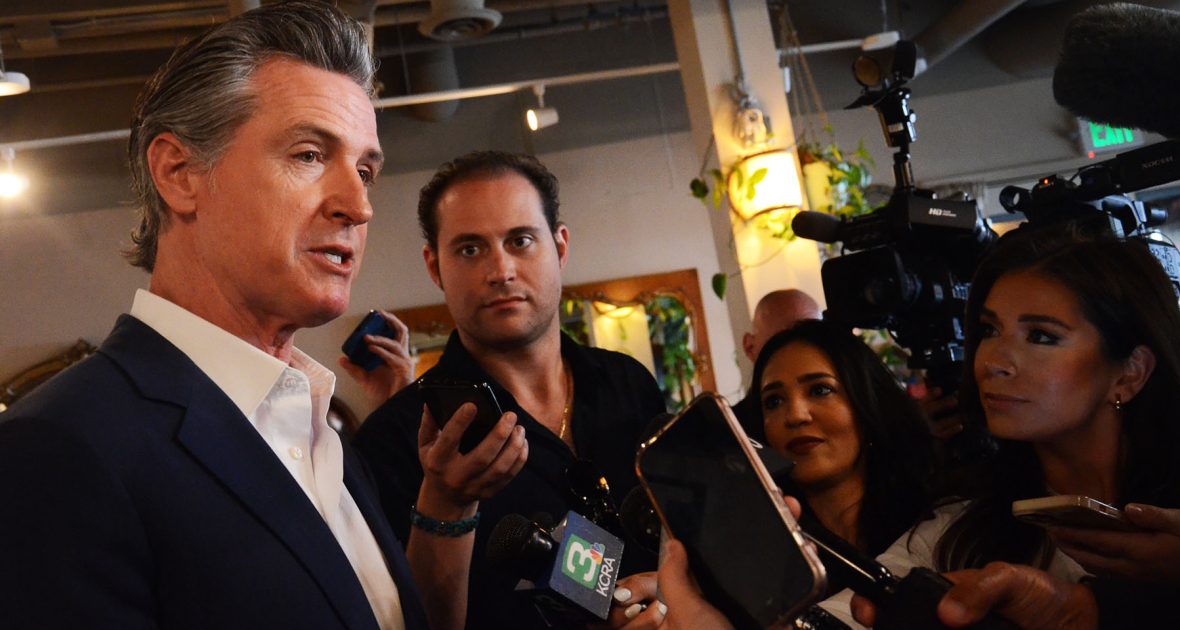


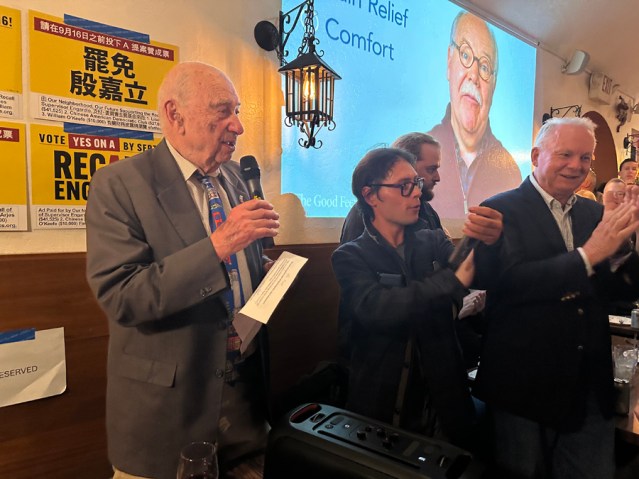

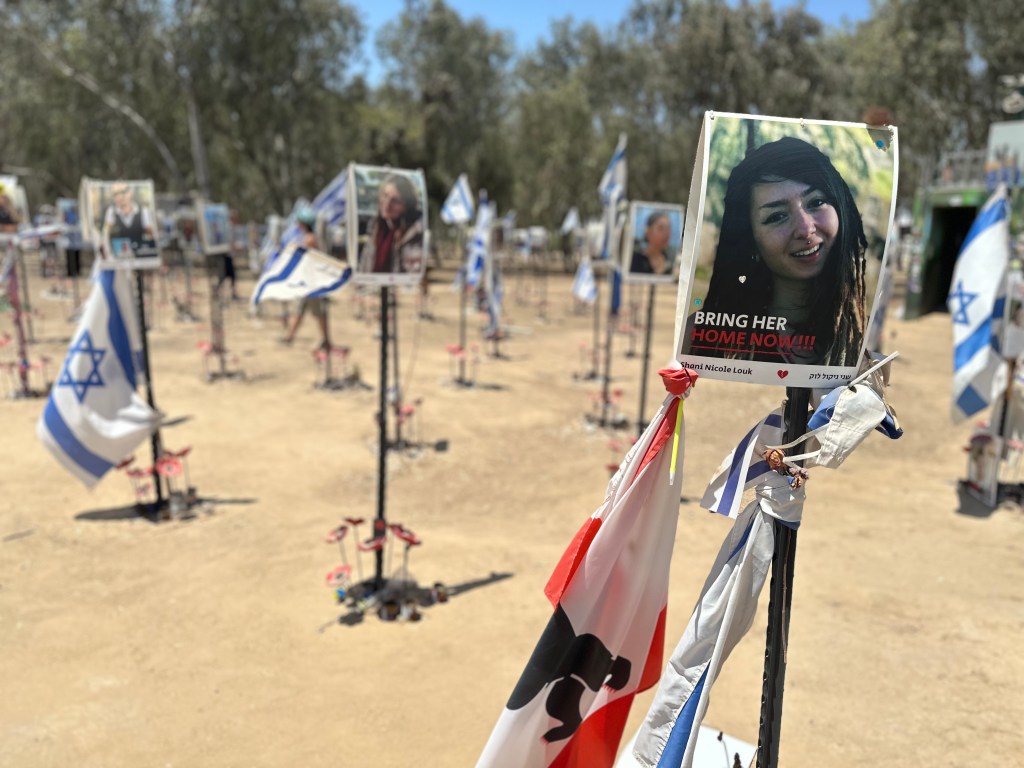


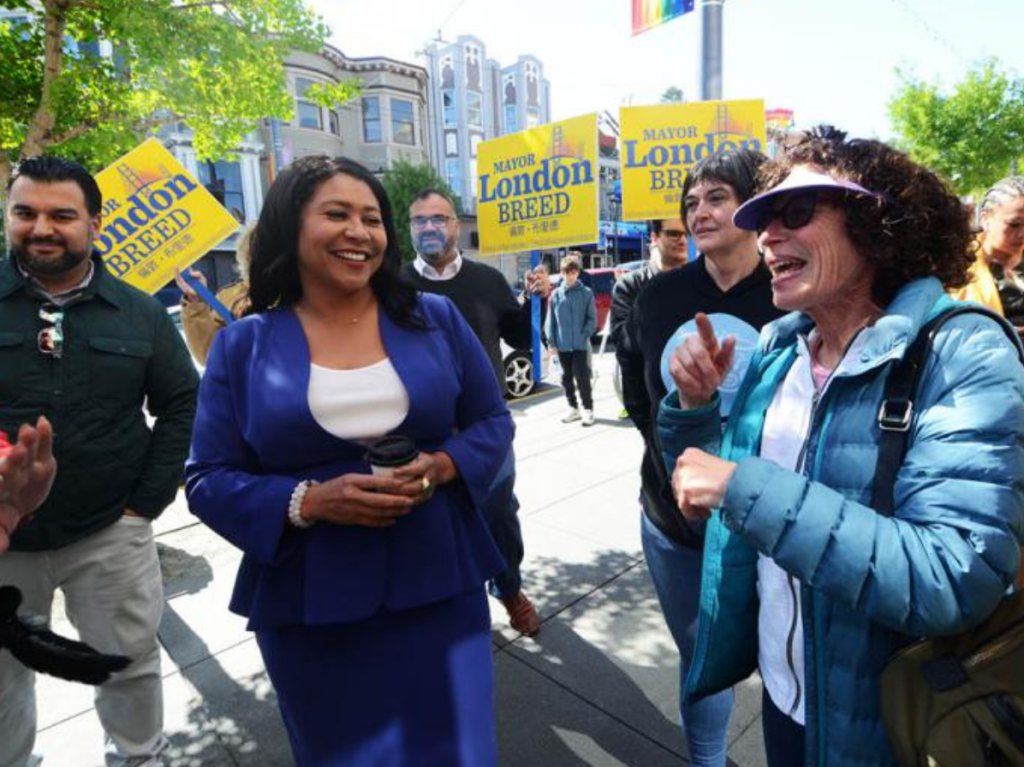

 John Ferrannini